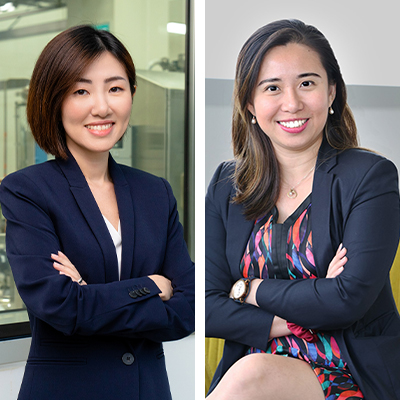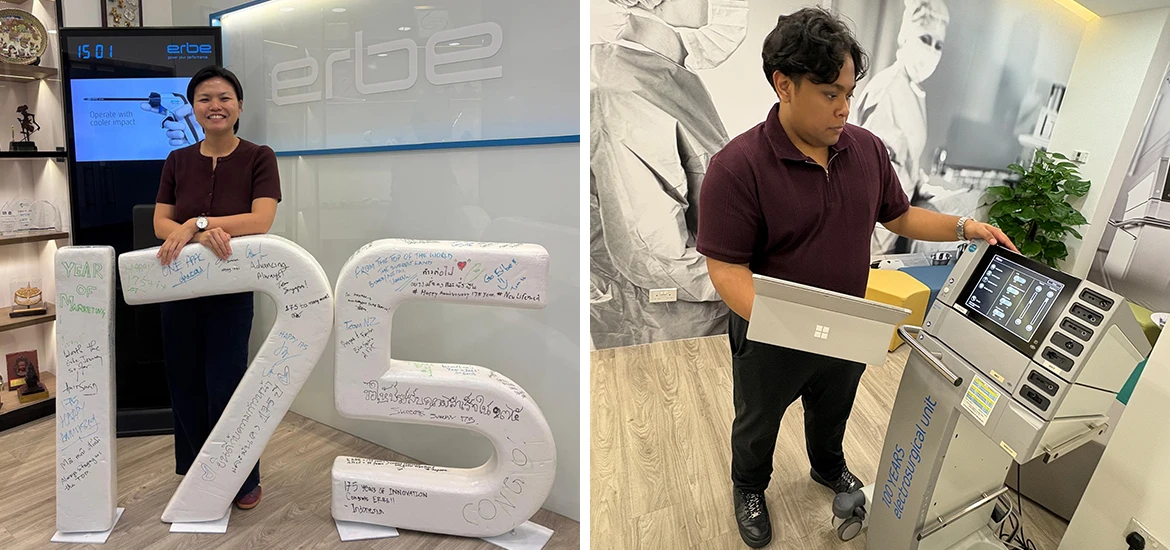
Erbe is a German MedTech company that develops, manufactures, and markets medical devices to hospitals across APAC and the world. Its devices can be applied across various surgical disciplines, and the company also provides training in advanced surgical technologies. Erbe first set up a small commercial office for Southeast Asia in Singapore in 2007. In 2013, it opened its APAC regional headquarters here, bringing together functions such as sales and marketing, finance, and digital research and development.
Ang Li Ping
- Tell us more about what you do as a Clinical Study Manager at Erbe.
- What are some of the challenges you faced transitioning into MedTech? How has your technical and research background helped you navigate that switch?
- What do you enjoy most about your job, and what are some of the more impactful projects you’ve worked on?
- As a working mother yourself, what words of advice do you have for other women on balancing career growth with motherhood?
Syed Amirul Hakim
- Tell us more about what you do as a Service Engineer at Erbe.
- How did you end up in your current role at Erbe?
- What are some of the more impactful projects you’ve worked on, and what have you learnt from these experiences?
- What makes MedTech such an exciting field to be in, and what advice do you have for Singaporeans looking to pursue a career in the sector?
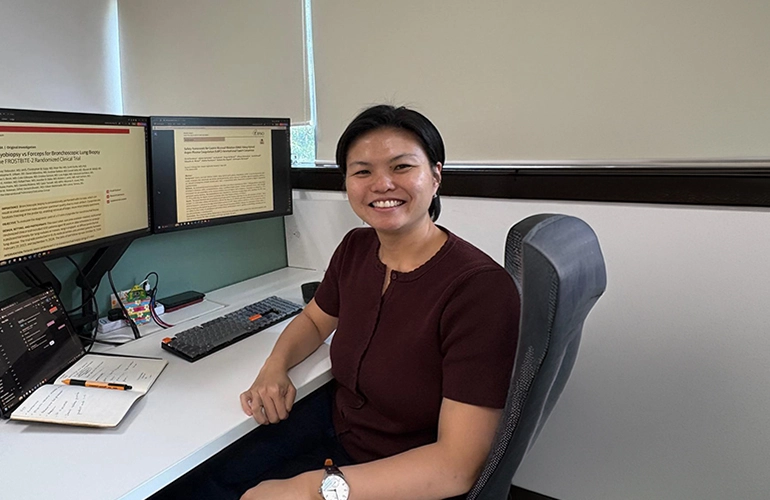
Ang Li Ping used to test patient samples for bacteria and parasites in her early years as a microbiology researcher at the Singapore General Hospital (SGH). Equipped with technical skills, she moved into MedTech where she now runs clinical trials to show Erbe’s products are safe and effective. A graduate of the University of Western Australia, she has been with Erbe since 2019.
1. Tell us more about what you do as a Clinical Study Manager at Erbe.
At Erbe, we rely on proper data to back up what we say about our products. This comes from clinical studies conducted with doctors.
Before a study can begin, we will first need to understand the regulatory and ethical requirements, which can differ by country and hospital. We then prepare the necessary documents for the clinical trial and work closely with different stakeholders to run the study properly. A big part of my role is to act as a bridge between doctors, hospitals, and my colleagues at Erbe. I spend a lot of time understanding the needs of doctors and hospitals and communicating them to our internal teams, while balancing these perspectives with our company’s priorities.
With the advent of technology and AI, clinical studies are also evolving. Beyond traditional trials involving patients, we are now exploring studies for digital solutions, such as Erbe’s emPOWER app. The app gives users of our electrosurgical units useful data and insights, so they can track their progress over time and improve their skills. The digital space is still relatively new to me, which is why I’m spending some time picking up tech "lingo" and learning more about how these kinds of clinical trials are usually conducted.
Learn how Melis and Jowyn are driving the next chapter of growth for Singapore’s biomedical sciences sector
2. What are some of the challenges you faced transitioning into MedTech? How has your technical and research background helped you navigate that switch?
In the diagnostic and research lab, we were used to putting our heads down, working hard, and producing results quickly. We knew our work supported patient care, but we were also somewhat shielded from the realities of cost, business needs, and relationship management.
It was a big change for me when I moved from the structure of the lab to an office environment where every day could bring a new challenge. I had no business background when I first joined Erbe and I had to pick up a completely new way of thinking. I had to understand the workings of the business and how best to balance different priorities, while still advancing scientific research. That experience taught me not to limit myself to what I was trained to do in science. In fact, you need to stay open to learning many different things, whether it is in business, IT or stakeholder management – all these play a part in helping the company move forward.
At the same time, my lab experience gave me a strong foundation. Skills like time management, attention to detail, problem-solving, and critical thinking have been very useful in helping me adapt. Erbe has also supported my growth through its Start2Grow talent management programme, which challenged me to think more like a leader, rather than an individual contributor.
“What keeps me going is seeing how new ideas and innovations, developed together with doctors, can make a real difference to patients. That is why I find MedTech meaningful – at the end of the day, we are providing doctors with the tools they need to care for patients better.”
Ang Li Ping
Clinical Study Manager
Erbe
3. What do you enjoy most about your job, and what are some of the more impactful projects you’ve worked on?
The MedTech industry is very dynamic, and that is what makes the work exciting. There are always new products and procedures to learn about. Being part of the Clinical Research team also means I get to see innovation at an early stage – I often have the chance to work with devices that the company is developing before they are approved, or before most people even know they exist.
My role has given me the opportunity to work with colleagues in Germany and the US, and to speak with doctors from around the world. Besides thinking about time zones when setting up meetings, I’ve learned to how to better navigate cultural norms. For instance, Germans consider it bad luck when you send them a birthday greeting before their birthday, and you should always use salutations when addressing Japanese and Korean doctors. On the other hand, it’s all right to call Australian doctors by their first names. I’ve also been able to observe doctors across different countries at work in procedure rooms and operating theatres.
One memorable project was a clinical trial in Australia I helped plan and set up to validate a new, minimally invasive technique for weight loss. It was the only centre from the APAC region involved in the trial, and this required close collaboration with staff from an Australian hospital to understand their clinical practices and cultural norms. The data from the trial is now being presented together with data from Europe and the US to show that the technique is safe and effective for use, which was very rewarding to see.
What keeps me going is seeing how new ideas and innovations, developed together with doctors, can make a real difference to patients. Even when a device does not work exactly as planned, the learnings we get are still valuable because they help us understand what can be improved. That is why I find MedTech meaningful - at the end of the day, we are providing doctors with the tools they need to care for patients better.
Discover how Qiao Yan is advancing breakthroughs in genomics, as part of Singapore’s growing biotech ecosystem
4. As a working mother yourself, what words of advice do you have for other women on balancing career growth with motherhood?
To other working mothers: I understand the guilt of giving up precious minutes with your children because you have to take an 8pm call. I also understand the frustration of trying to get your toddler to eat while at the back of your mind, you are thinking about a task that was due yesterday. I cannot say I have it completely figured out. What helps me now is accepting that balance will not always feel “fair”. Sometimes work will need more of your time and at other times, your children will pull you away from work.
Be intentional with your energy and time. When you are at work, focus on work. When you are at home, prioritise meaningful moments instead of trying to do everything. And most importantly, remember that it is okay to ask for help.
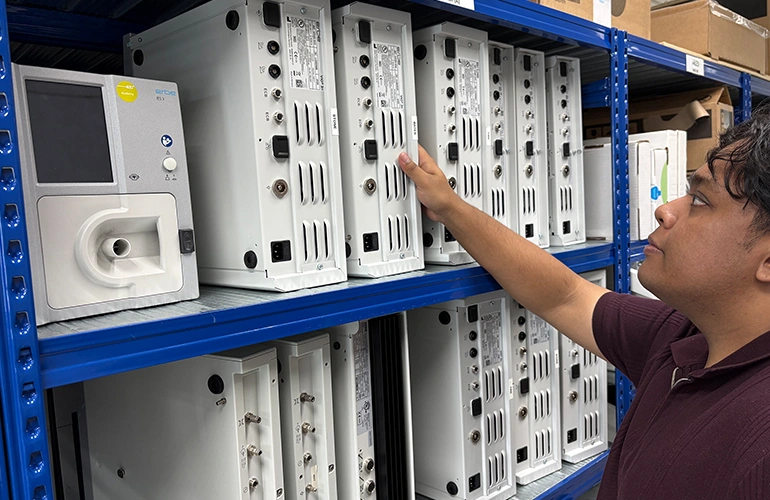
Syed Amirul Hakim is a Service Engineer at Erbe Singapore, where he oversees the servicing of medical devices across hospitals and clinics in Singapore. He has a Diploma in Biomedical Engineering in Temasek Polytechnic, and a Specialist Diploma in Biotechnology from the Republic Polytechnic–Singapore University of Social Sciences (RP-SUSS) Work-Study Programme. He joined Erbe Singapore upon completion of the programme.
1. Tell us more about what you do as a Service Engineer at Erbe.
My job is to make sure Erbe’s electrosurgical units, which are used during surgery to cut tissue and stop bleeding simultaneously, are working properly and reliably. A big part of my role is preventive maintenance – this means checking and servicing the units regularly before any issues happen. I also support hospitals and clinics in the setup and testing of our devices to ensure they are ready for use.
A typical day starts with planning and coordinating maintenance schedules with hospital teams, so servicing can be completed before the due dates. From there, I head onsite to carry out the maintenance, system checks, repairs, or technical support needed. What makes the work meaningful is knowing that when our units run smoothly, doctors and their teams can focus on carrying out procedures safely and effectively. This contributes to better patient care and medical outcomes for all.
Find out how Anisah balances a career in manufacturing — and life as a mother of four
2. How did you end up in your current role at Erbe?
After completing National Service, I joined the RP-SUSS Work-Study Programme at Erbe. The programme was a useful way for me to ease back into the working world and gave me the chance to refresh my knowledge by applying what I had learnt in school in a real-world setting.
As the programme was coming to an end, I started looking at roles in other MedTech companies and hospitals. Many offered similar salaries but needed a relevant degree. Erbe’s offer was competitive, and I was already familiar with its products, people and working environment. That made it an easy decision for me to stay on as a full-time employee.
“What makes MedTech such an exciting field is that it is fast-paced and always evolving. New technologies, new innovations, and new ways of improving patient care are emerging all the time. This rapid pace of development means that you can never really stand still in this industry. You have to keep learning, stay open to change, and be willing to adapt to avoid becoming obsolete.”
Syed Amirul Hakim
Service Engineer
Erbe
3. What are some of the more impactful projects you’ve worked on, and what have you learnt from these experiences?
One of my most memorable experiences was working with engineers from our Malaysian distributors to set up the Erbe Imaging System in Kuala Lumpur and Kuantan. It was my first overseas work assignment, and I had the chance to work with Erbe’s regional team, which allowed me to gain insights into how engineers in another country approach their work. I got to see different working styles, learn from their best practices, and bring some of those lessons back into my own work as an engineer.
I also travelled to Erbe’s headquarters in Germany for specialised service training in June this year. It was a great opportunity for me to deepen my technical knowledge and to learn more about how to better service Erbe’s medical equipment. I had the chance to exchange experiences with trainers and fellow trainees and pick up new troubleshooting approaches that I can share with my team back in Singapore.
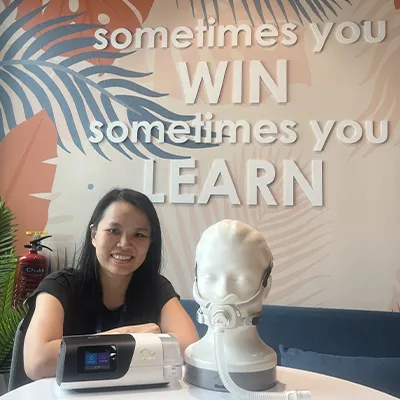
Discover how Estee uses her engineering skills to help people sleep better at night
4. What makes MedTech such an exciting field to be in, and what advice do you have for Singaporeans looking to pursue a career in the sector?
What makes MedTech such an exciting field is that it is fast-paced and always evolving. New technologies, new innovations, and new ways of improving patient care are emerging all the time. This rapid pace of development means that you can never really stand still in this industry. You have to keep learning, stay open to change, and be willing to adapt to avoid becoming obsolete.
For Singaporeans who are thinking about a career in MedTech, my advice is to be prepared to put in the time and effort. Everyone in the industry plays an important part, from engineers on the ground helping to keep medical equipment running safely and reliably, to product development teams designing and improving the medical systems that doctors use. It is truly a team effort, and everyone contributes in their own way to moving the company and the sector forward.