Singapore is a leading tech hub in Asia, with 80 of the world’s top 100 tech firms headquartered in the city-state. The country is also second globally in IMD’s World Digital Competitiveness Ranking.
The country is now bolstering its infrastructure with 5G. Take a spin through this infographic to see Singapore's 5G roadmap, applications for logistics, autonomous vehicles, and healthcare sectors, and support programmes to help you speed ahead.



With a focus on reliability and enabling enterprise innovation, Singapore is setting its sights on deploying two nationwide 5G standalone networks by 2025.




A standalone 5G network will enable companies and users to tap full-fledged benefits of 5G, and unlock greater enterprise innovation.
Currently Singapore is supporting several operators indeploying both standalone and non-standalone 5G trials. These trials provide early opportunities for consumers to enjoy faster mobile speeds and companies a fast start in developing use cases ahead of the nationwide rollout.

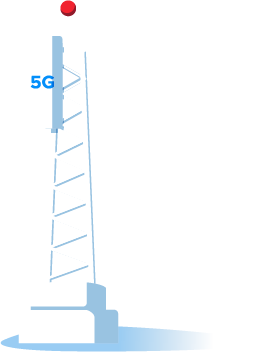
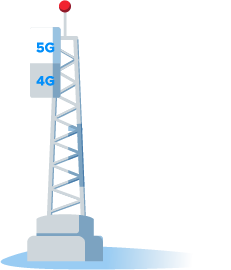
With trials for 5G underway, Singapore is on track to deploy a nationwide network in the coming years.



Singapore expressed its support for operators to deploy non-standalone 5G networks, with telcos M1, StarHub, Singtel leading the first wave. Singtel has also launched standalone trial network for enterprises.
Singapore aims to deploy 5G standalone capabilities extending to at least half of the island.
Two nationwide 5G standalone networks are planned, unlocking full-fledged 5G capabilities for businesses.
Both established enterprises and startups are already tapping into the network, testing new ideas across logistics, transport and healthcare. Click each of the icons below to find out more about 5G applications. If you're ready to explore opportunities with 5G, click on thesupport programmes button to learn how your company can tap into opportunities in Singapore.



Self-driving to
self-flying

Transparent and trackable
supply chains

Real-time monitoring
of patients
5G will accelerate development and production of autonomous vehicles (AV), which require real-time edge computing, cutting edge sensing technologies and intelligent control systems. Singapore’s Land Transport Authority is expanding the country’s AV testbed. The entire western part of Singapore, more than 1,000 km of public roads, is being opened to test self-driving vehicles.
Going beyond AVs, urban air mobility may soon become a reality in Singapore. Telco M1 and Airbus partnered the Singapore Government to conduct network coastal trials of unmanned aerial vehicles.





5G will help to scale blockchain solutions, by enabling large amounts of data to be collected and analysed. Startups in Singapore, such asDiMuto, which enables the tracking and tracing of physical products for global supply chains, will be able to leverage 5G to deploy more innovative solutions for their customers.


The improvement to communication capacity and speed will also benefit the healthcare industry. The Singapore General Hospital (SGH) has been testing applications that enable real-time monitoring of patients at the hospital’s emergency department.
At the NYP-StarHub Application & Experience Centre for 5G, SGH is working with Nanyang Polytechnic to co-develop applications that will tap the benefits of 5G connectivity.



As the first of customers start to experience 5G, the next generation network is fast becoming a reality in Singapore. The Singapore government has and will continue to roll-out programmes to support industries in capturing opportunities presented by 5G.
$40 million has been set aside to support 5G trials in strategic sectors. In 2021, IMDA announced a new $30 million fund to bolster support for companies looking to test and adopt 5G solutions.
Efforts are underway to groom talent versed in 5G. Under aninitiative by IMDA and mobile network operators, 1,000 roles in 5G expertise will be created by end 2020, with plans to train 5,000 more professionals over the next three years.
Launched in September 2020, the lab will facilitate industry efforts to develop new 5G solutions and build up technical capabilities. Businesses will be able to develop and test 5G-enabled devices and applications at the facility.
M1 and SGInnovate will collaborate to connect startups with corporate partners to implement 5G technology for the startups' products and solutions.
Singapore is a leading tech hub in Asia, with 80 of the world’s top 100 tech firms headquartered in the city-state. The country is also second globally in IMD’s World Digital Competitiveness Ranking.
The country is now bolstering its infrastructure with 5G. Take a spin through this infographic to see Singapore's 5G roadmap, applications for logistics, autonomous vehicles, and healthcare sectors, and support programmes to help you speed ahead.

With a focus on reliability and enabling enterprise innovation, Singapore is setting its sights on deploying two nationwide 5G standalone networks by 2025.

A standalone 5G network will enable companies and users to tap full-fledged benefits of 5G, and unlock greater enterprise innovation.
Currently Singapore is supporting several operators indeploying both standalone and non-standalone 5G trials. These trials provide early opportunities for consumers to enjoy faster mobile speeds and companies a fast start in developing use cases ahead of the nationwide rollout.

With trials for 5G underway, Singapore is on track to deploy a nationwide network in the coming years.
Singapore expressed its support for operators to deploy non-standalone 5G networks, with telcos M1, StarHub, Singtel leading the first wave. Singtel has also launched standalone trial network for enterprises.
Singapore aims to deploy 5G standalone capabilities extending to at least half of the island.
Two nationwide 5G standalone networks are planned, unlocking full-fledged 5G capabilities for businesses.
Both established enterprises and startups are already tapping into the network, testing new ideas across logistics, transport and healthcare.

Self-driving
to self-flying
Transparent and trackable
supply chains
Real-time monitoring
of patients

5G will accelerate development and production of autonomous vehicles (AV), which require real-time edge computing, cutting edge sensing technologies and intelligent control systems. Singapore’s Land Transport Authority is expanding the country’s AV testbed. The entire western part of Singapore, more than 1,000 km of public roads, is being opened to test self-driving vehicles.
Going beyond AVs, urban air mobility may soon become a reality in Singapore. Telco M1 and Airbus partnered the Singapore Government to conduct network coastal trials of unmanned aerial vehicles.

5G will help to scale blockchain solutions, by enabling large amounts of data to be collected and analysed. Startups in Singapore, such asDiMuto, which enables the tracking and tracing of physical products for global supply chains, will be able to leverage 5G to deploy more innovative solutions for their customers.

The improvement to communication capacity and speed will also benefit the healthcare industry. The Singapore General Hospital (SGH) has been testing applications that enable real-time monitoring of patients at the hospital’s emergency department.
At the NYP-StarHub Application & Experience Centre for 5G, SGH is working with Nanyang Polytechnic to co-develop applications that will tap the benefits of 5G connectivity.

As the first of customers start to experience 5G, the next generation network is fast becoming a reality in Singapore. The Singapore government has and will continue to roll-out programmes to support industries in capturing opportunities presented by 5G.

$40 million has been set aside to support 5G trials in strategic sectors. In 2021, IMDA announced a new $30 million fund to bolster support for companies looking to test and adopt 5G solutions.
Efforts are underway to groom talent versed in 5G. Under aninitiative by IMDA and mobile network operators, 1,000 roles in 5G expertise will be created by end 2020, with plans to train 5,000 more professionals over the next three years.
Launched in September 2020, the lab will facilitate industry efforts to develop new 5G solutions and build up technical capabilities. Businesses will be able to develop and test 5G-enabled devices and applications at the facility.
M1 and SGInnovate will collaborate to connect startups with corporate partners to implement 5G technology for the startups' products and solutions.

Singapore is a leading tech hub in Asia, with 80 of the world’s top 100 tech firms headquartered in the city-state. The country is also second globally in IMD’s World Digital Competitiveness Ranking.
The country is now bolstering its infrastructure with 5G. Take a spin through this infographic to see Singapore's 5G roadmap, applications for logistics, autonomous vehicles, and healthcare sectors, and support programmes to help you speed ahead.
With a focus on reliability and enabling enterprise innovation, Singapore is setting its sights on deploying two nationwide 5G standalone networks by 2025.
A standalone 5G network will enable companies and users to tap full-fledged benefits of 5G, and unlock greater enterprise innovation.
Currently Singapore is supporting several operators indeploying both standalone and non-standalone 5G trials. These trials provide early opportunities for consumers to enjoy faster mobile speeds and companies a fast start in developing use cases ahead of the nationwide rollout.
With trials for 5G underway, Singapore is on track to deploy a nationwide network in the coming years.
Singapore expressed its support for operators to deploy non-standalone 5G networks, with telcos M1, StarHub, Singtel leading the first wave. Singtel has also launched standalone trial network for enterprises.
Singapore aims to deploy 5G standalone capabilities extending to at least half of the island.
Two nationwide 5G standalone networks are planned, unlocking full-fledged 5G capabilities for businesses.
Both established enterprises and startups are already tapping into the network, testing new ideas across logistics, transport and healthcare.
Self-driving
to self-flying
Transparent and trackable
supply chains
Real-time monitoring
of patients
5G will accelerate development and production of autonomous vehicles (AV), which require real-time edge computing, cutting edge sensing technologies and intelligent control systems. Singapore’s Land Transport Authority is expanding the country’s AV testbed. The entire western part of Singapore, more than 1,000 km of public roads, is being opened to test self-driving vehicles.
Going beyond AVs, urban air mobility may soon become a reality in Singapore. Telco M1 and Airbus partnered the Singapore Government to conduct network coastal trials of unmanned aerial vehicles.
5G will help to scale blockchain solutions, by enabling large amounts of data to be collected and analysed. Startups in Singapore, such asDiMuto, which enables the tracking and tracing of physical products for global supply chains, will be able to leverage 5G to deploy more innovative solutions for their customers.
The improvement to communication capacity and speed will also benefit the healthcare industry. The Singapore General Hospital (SGH) has been testing applications that enable real-time monitoring of patients at the hospital’s emergency department.
At the NYP-StarHub Application & Experience Centre for 5G, SGH is working with Nanyang Polytechnic to co-develop applications that will tap the benefits of 5G connectivity.
As the first of customers start to experience 5G, the next generation network is fast becoming a reality in Singapore. The Singapore government has and will continue to roll-out programmes to support industries in capturing opportunities presented by 5G.
$40 million has been set aside to support 5G trials in strategic sectors. In 2021, IMDA announced a new $30 million fund to bolster support for companies looking to test and adopt 5G solutions.
Efforts are underway to groom talent versed in 5G. Under aninitiative by IMDA and mobile network operators, 1,000 roles in 5G expertise will be created by end 2020, with plans to train 5,000 more professionals over the next three years.
Launched in September 2020, the lab will facilitate industry efforts to develop new 5G solutions and build up technical capabilities. Businesses will be able to develop and test 5G-enabled devices and applications at the facility.
M1 and SGInnovate will collaborate to connect startups with corporate partners to implement 5G technology for the startups' products and solutions.