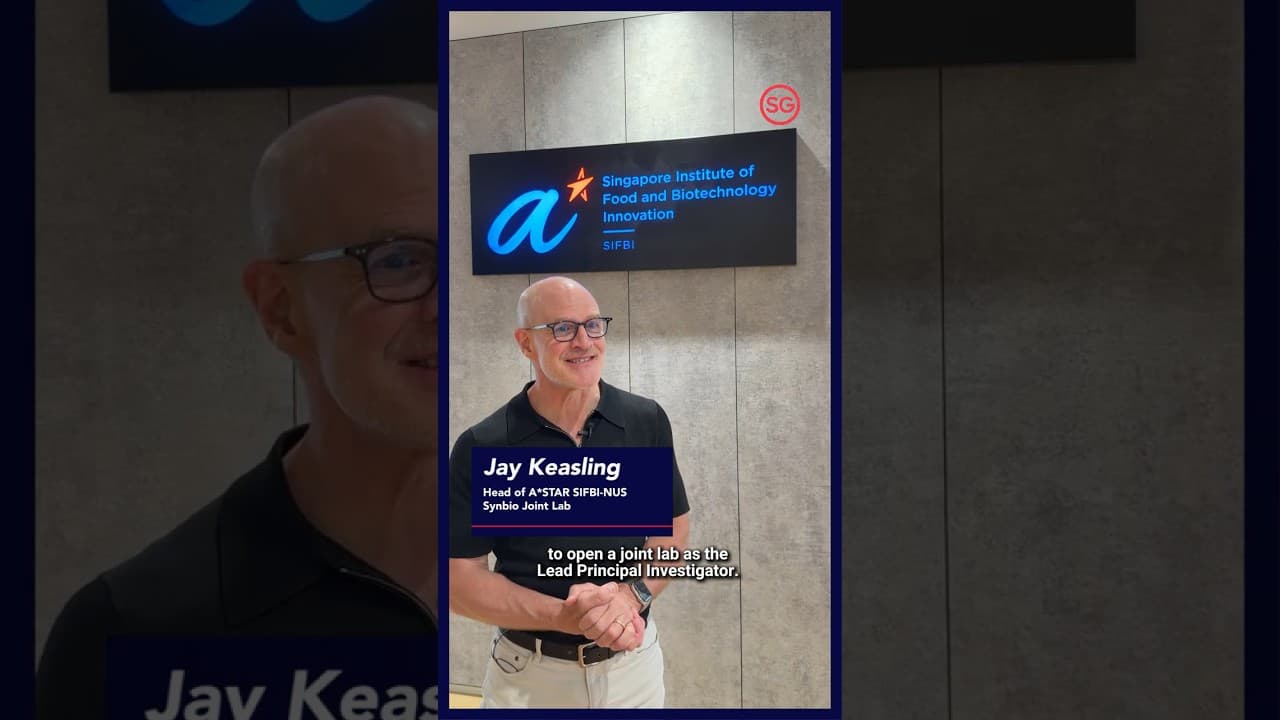

Singapore's growing capabilities in industrial biotechnology are making it a compelling destination for the world's leading minds in synthetic biology — a field that uses living organisms like fungi and yeast to produce medicines, fuels, materials and more. As the global energy transition accelerates demand for sustainable products, one of the field’s foremost pioneers, Prof. Jay Keasling, is building his newest research venture here.
A professor at the University of California, Berkeley, Prof. Keasling has chosen Singapore as the home for the A*STAR SIFBI-NUS Synthetic Biology Joint Laboratory. Established in partnership with the Agency for Science, Technology and Research’s Singapore Institute of Food and Biotechnology Innovation (A*STAR SIFBI) and the National University of Singapore (NUS), the lab focuses on engineering fungal host systems to produce novel molecules for human health and longevity.
In this Q&A, he discusses what it takes to turn scientific advances into commercially relevant products, and how Singapore can build the capabilities and talent to participate in the growing bioeconomy.
As the market for synthetic biology is projected to grow to over US$60b by 2030, what do you see as its most exciting opportunities ahead?
I have been in synthetic biology for a very long time – probably from the start. It has been an extraordinarily exciting field. My team has engineered microbes to produce life-saving anti-malarial medicines and vaccine ingredients, demonstrating how biology can be more sustainable and cost-effective than traditional methods.
Looking ahead, synthetic biology has the potential to reshape healthcare, sustainable manufacturing, energy and agriculture. From healthier lives to greener fuels and biodegradable materials, as well as new ingredients that you apply to your skin, consume as food or take as medicine, synthetic biology offers powerful solutions to some of humanity’s greatest challenges. The possibilities are vast, and I believe we are only beginning to unlock its potential.