
Singapore has built its economic success on being a trusted hub connecting the world. But as trade shifts, technology disrupts industries and global uncertainty deepens, the city-state faces a new imperative: adapt faster to stay ahead. As a major hub for business and finance, Singapore continues to attract capital, talent and ideas.
It reclaimed the top spot in the 2026 IMD World Competitiveness Ranking, making a seven-place jump to rank first globally in business efficiency. The ranking assesses four key areas: economic performance, government efficiency, business efficiency and infrastructure. These strengths continue to draw global companies to Singapore, giving them a base from which to tap opportunities across the region and beyond.
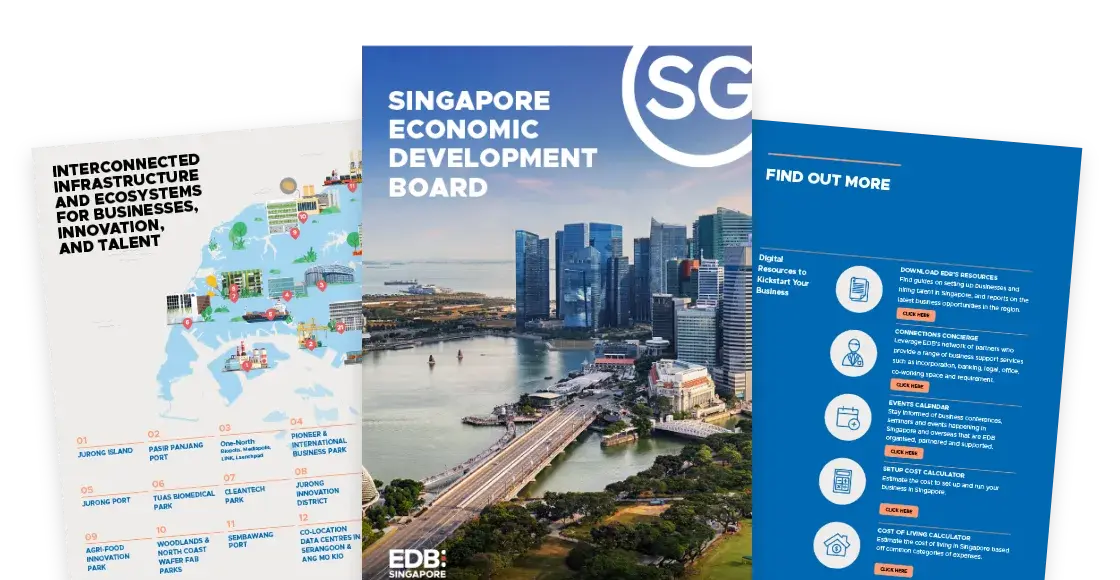
The Singapore Economic Development Board (EDB) helps these companies by facilitating their market entry, growth and regional expansion, while connecting them with talent and Singapore’s innovation ecosystem. The EDB’s Industrial Postgraduate Programme, for example, gives companies access to a highly skilled talent pool, while policies such as the National AI Strategy 2.0 and the AI Verify Foundation’s Testing Framework and Toolkit provide global technology firms with the regulatory clarity to research and deploy sensitive, proprietary systems with confidence.
Singapore’s startup ecosystem is one of the fastest growing in the world, with more than 4,500 companies spanning sectors from fintech, deep tech and AI to food tech, advanced manufacturing and healthcare. Startups based in Singapore benefit from access to funding, strong government support and regional and global market opportunities, creating a strong foundation for growth and innovation.
Everise is one such success story. What began as a modest startup in Singapore has grown into a billion-dollar global customer experience company specializing in healthcare. Its beginnings in Singapore gave Everise access to the capital and visionary partners it needed to pursue its ambitions. The company has credited Singapore as a key node connecting it to a succession of world-class strategic partners.
Technology as a Competitive Edge
Singapore’s economy grew by 6.1% year-on-year in the first half of 2026, supported by robust AI-related investment and resilient manufacturing exports. This stronger-than-expected performance prompted the Ministry of Trade and Industry to raise its 2026 GDP growth forecast to 4.5% to 5.5%, from its previous forecast of 2.0% to 4.0%. The revised outlook is also underpinned by an expected acceleration in global AI-related capital expenditure.
Against this backdrop, Singapore continues to invest in its digital ecosystem, supporting businesses—including small and medium-sized enterprises—in adopting AI and equipping workers with the skills they need to use it effectively. These efforts are aimed at strengthening Singapore’s AI capabilities across both enterprises and the workforce.
The Infocomm Media Development Authority (IMDA) is a driving force behind Singapore’s digital transformation efforts, supporting enterprises in adopting digital technologies and AI and strengthening their competitiveness in the digital economy. Its initiatives are designed to meet different business needs and levels of digital maturity, helping enterprises take the next step in their digital journey.
Homegrown companies such as PSC Corporation, Tat Seng Packaging and Tee Yih Jia Food Manufacturing have maintained their competitive edge by focusing on innovation, sustainability and digital transformation. For these companies, the future lies in building on proven strengths while adopting new technologies to prepare for what comes next.
Changing Demographics, Evolving Needs
Change is sweeping across the healthcare sector. As Singapore’s population ages, a new model of care is needed to meet evolving demands. IHH Healthcare, for instance, is shifting from a hospital-focused group toward an integrated healthcare ecosystem player spanning prevention, diagnosis, treatment and recovery. A central part of this strategy is moving suitable procedures from hospitals to ambulatory and community care, so that hospitals can focus on emergencies and complex, high-acuity care. IHH believes that the future of healthcare will be defined by how effectively every part of the ecosystem works together around the patient, improving access, affordability and continuity of care.
The concept of building an interconnected ecosystem is also shaping the future of real estate. While mixed-use developments have long brought different asset classes together, the focus is increasingly on creating connected environments where residential, commercial and retail spaces work together to create places where people want to live, work and play.
GuocoLand believes that the ultimate test of placemaking is whether a development uplifts its neighborhood, attracts diverse communities, creates activity beyond office hours and becomes a destination with its own sense of identity. This philosophy is applied at Guoco Midtown, an integrated development that seeks to rejuvenate the entire district. GuocoLand believes that as Singapore continues to evolve, integrated mixed developments will play an increasingly important role in making the city more connected, sustainable and livable.
Looking Ahead
As Singapore prepares to assume the ASEAN Chairmanship in 2027, it will continue to build on its strengths and adapt swiftly to a rapidly changing and increasingly uncertain global environment. It will seek to strengthen ASEAN centrality and unity, deepen regional integration and advance ASEAN as a more effective single market. Globally, Singapore will continue to position itself as a trusted, relevant and resilient hub, ready to navigate future challenges and opportunities.