Singapore Economic Development Board (EDB)

About EDBCareersEDB PortalContact us

250 North Bridge Road
#28-00 Raffles City Tower
Singapore 179101
LinkedIn IconInstagram IconFacebook IconYoutube Icon

Report vulnerability

Privacy policy

Terms of use

Whistleblowing

Manage cookies

Sitemap

© 2026 Singapore Economic Development Board

Last updated 31 Aug 2026

Singapore EDB logo
Singapore EDB logo
//

How renewable energy project developers can power Southeast Asia's green energy transition

Southeast Asia has ambitious net-zero targets and will have to accelerate renewables capacity to achieve these goals. To capture these opportunities, renewable energy project developers need to formulate unique strategies for the region.
how renewable energy project developers can power southeast asias green energy transition 1170x550
03 Dec 2023•3 min read

Southeast Asia aims to achieve net zero emissions between 2050 and 2060. That can only happen if the region amps up its deployment of renewable energy. According to a McKinsey-Singapore Economic Development Board (EDB) 2023 report, non-firm renewable energy penetration in Southeast Asia stood at just 5 percent as of 2022. There is enormous room for growth — the region’s renewables potential amounts to 16 terawatts (TW) of solar energy and 1 TW of wind energy.
 

Opportunities for growth

In Southeast Asia, there are state-led targets and support programmes for such development, as well as ambitious decarbonisation goals from the region’s numerous commercial and industrial consumers.

However, investment in solar and wind energy capacity in Southeast Asia is currently among the lowest in the world, and annual renewable capacity additions must increase seven to 12 times to realise the region’s net-zero aspirations. This lag is due to Southeast Asia’s unique conditions, which must be well understood by renewable energy project developers who want to grasp the growth opportunities in the region’s renewables markets.
 

Understanding regional challenges

In contrast to Europe and North America’s more liberal and competitive markets, stable regulatory frameworks, and clear decarbonisation goals, Southeast Asia’s markets tend to be tightly regulated. There is likely to be local price sensitivity towards tariffs, with the presence of several vertically integrated incumbents. Governments may seek to ensure the competitiveness of local industries as a means of balancing economic development with decarbonisation targets. These factors present some degree of policy uncertainty, which raises risk for private-sector players and consequently, their cost of capital.

Renewable energy project developers who are ready to engage with these challenges have the opportunity to be trailblazers in this emerging sector. 
 

Ways to shape Southeast Asia’s renewables landscape

  • Establish a local presence to develop strong local networks. Some renewable energy project developers deploy the hub and spoke model, with their regional headquarters in Singapore and local teams in other Southeast Asia markets. This enables a clearer view on how different renewables markets are developing, and better access to project opportunities.  
Find out how Singapore can help renewable energy developers fast track development in the region.

  • Engage regulators to shape stable and mutually beneficial frameworks, using unique solutions and best practices honed in more mature renewables markets. For example, Keppel Energy is engaging Singapore’s regulators to import renewable and carbon-free electricity to the island.
  • Develop B2B solutions that address the needs of regional industrial players. Sunseap, a Singapore-based renewable energy company, offers smaller solar PV systems and financing and commercial structures customised for such customers.
  • Embark on bold developments that pave the way for at-scale capital investments in the region. For example, Sembcorp Utilities’ project to import 1.2 GW of electricity from Vietnam to Singapore stands to create tremendous value for the renewables ecosystem in both countries.
  • Use Southeast Asia's unique conditions to catalyse further innovation. For instance, these markets are likely to be receptive to new offerings such as energy storage solutions and export/import services for renewable energy.

Southeast Asia’s pathway for renewable energy is not likely to resemble the trajectory of developed markets, and renewable energy project developers will face distinct challenges. However, early movers who are ready to apply their strengths and innovation to these challenges stand to reap many rewards as the region gears up for sustainable growth.

Download the full report for company success stories and deeper insights on Southeast Asia’s renewables markets. 

Topics
Sustainability
Southeast Asia

The latest business insights and news delivered to your inbox

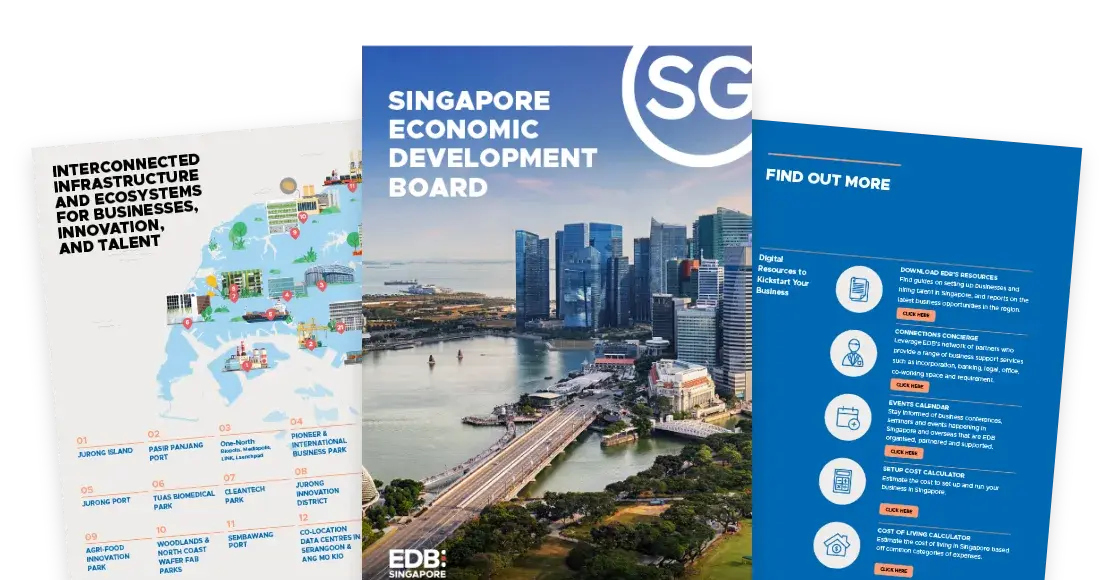
A picture of 3 brochures advertising EDB