Singapore Economic Development Board (EDB)

About EDBCareersEDB PortalContact us

250 North Bridge Road
#28-00 Raffles City Tower
Singapore 179101
LinkedIn IconInstagram IconFacebook IconYoutube Icon

Report vulnerability

Privacy policy

Terms of use

Whistleblowing

Manage cookies

Sitemap

© 2026 Singapore Economic Development Board

Last updated 31 Aug 2026

Singapore EDB logo
Singapore EDB logo
//

Singapore inks carbon credit pact with Vietnam, its second Southeast Asian partner

Singapore has previously inked carbon credit agreements with eight other countries – Bhutan, Chile, Ghana, Papua New Guinea, Peru, Paraguay, Rwanda, and Thailand.
Singapore signs a carbon credit pact with Vietnam, expanding its regional market for high-quality offsets and advancing climate cooperation in Southeast Asia.
Singapore has estimated that it would use high-quality carbon credits to offset roughly 2.5 million tonnes of emissions a year from 2021 to 2030.
16 Sept 2025•3 min read

Vietnam has become the second Southeast Asian country to seal a carbon trading agreement with Singapore after Thailand, expanding the Republic’s market for carbon credits generated in the region.

The bilateral agreement makes Vietnam the ninth country that the Singapore Government and carbon tax-liable companies here can buy eligible credits from, to offset a fraction of their planet-warming emissions.

The pact, dubbed an implementation agreement, was signed virtually on 16 Sep by Singapore’s Minister for Sustainability and the Environment and Minister-in-Charge of Trade Relations Grace Fu and Vietnam’s Acting Minister of Agriculture and Environment Tran Duc Thang.

The eight other countries that have such implementation agreements with Singapore are Bhutan, Chile, Ghana, Papua New Guinea, Peru, Paraguay, Rwanda, and Thailand.

Get an overview of Singapore’s carbon services sector and how we help businesses to tap more opportunities

An implementation agreement is a legally binding document that governs the international transfer of carbon credits between two countries.

Under the Paris Agreement – an international treaty adopted by 195 parties to limit global warming – countries can buy carbon credits generated in other jurisdictions to meet domestic climate targets to reduce emissions.

The Ministry of Trade and Industry (MTI) said in a statement that Singapore is committed to channelling funds, equivalent to 5 per cent of carbon credit transactions, towards measures that help Vietnam to adapt to climate change.

Under the pact with Vietnam, Singapore is also committed to cancelling 2 per cent of carbon credits authorised at first issuance. Neither Singapore nor Vietnam can claim the cancelled credits towards their own climate targets. Such a cancellation of credits ensures that overall emissions are gradually forced to taper down over time, instead of just being offset somewhere else.

Said Ms Fu: “The signing of this implementation agreement marks an important new area of cooperation between our countries and creates new opportunities in our transition to a low-carbon economy.

“I am confident that this agreement will catalyse the development of climate change mitigation activities that reduce emissions, foster more regional cooperation to address the pressing challenges of climate change, and open up additional pathways towards sustainable development.”

Mr Thang said the agreement will establish a framework that marks a “turning point” that will open up new climate finance opportunities in areas like clean energy and sustainable smart agriculture.

“We also hope Singaporean enterprises will actively cooperate and invest in projects in Vietnam to generate high-quality carbon credits that meet international standards,” he added.

Associate Professor Daniel Lee, director of the Carbon Markets Academy of Singapore at Nanyang Technological University, said the finalisation of the pact builds momentum for greater collaboration within the region.

“I’m confident there will continue to be more such implementation agreements within Southeast Asia,” he added, calling the deal a tangible sign that a regional ecosystem can be realised to support more impactful action that prevents or reduces greenhouse gas emissions.
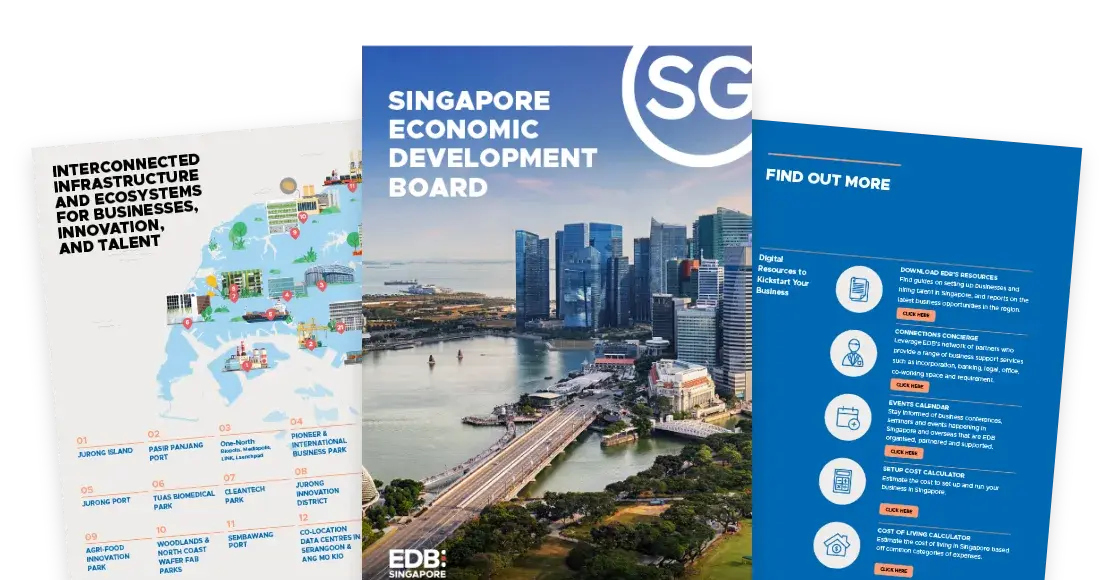
Learn about Singapore and Southeast Asia's potential for decarbonising and transitioning to renewable energy in our latest green economy report

Southeast Asia leads the next phase of global decarbonication and Singapore can be your launchpad. Read more in this report.

Implementation agreements are signed between countries to prevent double-counting, a situation where both the buyer and host country count the same emissions reductions or removals towards their own targets.

One carbon credit represents one tonne of carbon dioxide that is either prevented from being released, or removed from the atmosphere. Credits used to offset Singapore’s national emissions can be bought only from projects in countries with which the Republic has implementation agreements.

The Republic has estimated that it would use high-quality carbon credits to offset roughly 2.5 million tonnes of emissions a year from 2021 to 2030.

The MTI said the carbon projects authorised under the implementation agreement will promote sustainable development and deliver tangible benefits to local communities.

These include the creation of jobs, improved access to clean water, enhanced energy security, and reduction of environmental pollution.

Locally, the main buyers of carbon credits are either carbon tax-liable companies, which can buy credits to offset up to 5 per cent of taxable emissions, or the Singapore Government.


Source: The Straits Times © SPH Media Limited. Permission required for reproduction.

Topics
Sustainability
Southeast Asia
Developments in Singapore

The latest business insights and news delivered to your inbox

A picture of 3 brochures advertising EDB