A*STAR and NUS launch joint lab to accelerate translation of synthetic biology into real-world applications

A*STAR and NUS launch joint lab to accelerate translation of synthetic biology into real-world applications


This press release was issued by Agency for Science, Technology and Research (A*STAR).


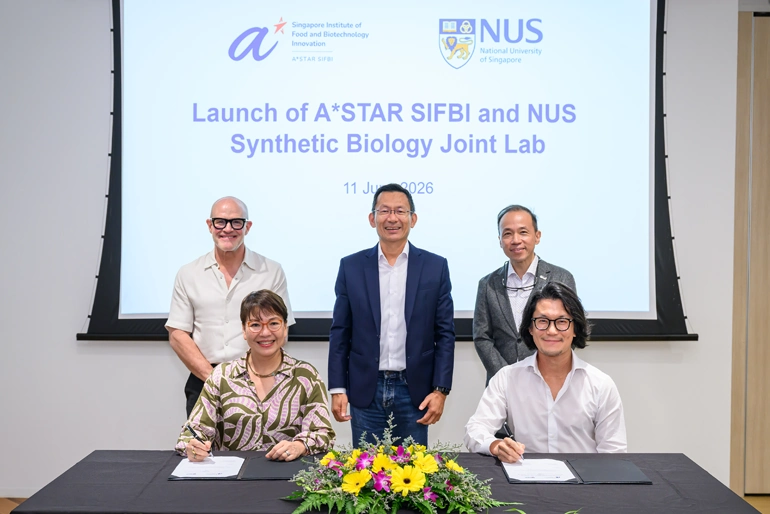
As industries seek more sustainable ways to produce ingredients, chemicals and materials, synthetic biology is opening up new routes to make useful compounds by engineering biological systems such as microbes and enzymes. The Agency for Science, Technology and Research (A*STAR) and the National University of Singapore (NUS) have launched a joint laboratory to help turn these research advances into commercially viable products.

The launch comes as global demand for such bio-based alternatives accelerates. The bioeconomy is projected to contribute up to US$4 trillion annually within the next decade, driven by a broad shift away from petrochemical-based production1.

The new A*STAR SIFBI-NUS Synthetic Biology Joint Lab is established by the A*STAR Singapore Institute of Food and Biotechnology Innovation (A*STAR SIFBI) and the NUS Synthetic Biology for Clinical and Technological innovation (NUS SynCTI). It will support efforts to strengthen translation in emerging technologies and grow the bioeconomy.

The joint laboratory brings together A*STAR SIFBI's capabilities in bioprocess development and scale-up, and NUS' strengths in fundamental science, interdisciplinary research and talent development. Its initial focus will be on nutrition and consumer care, with broader applications spanning advanced materials and health. It will support companies in co-developing testing and validating sustainable, synthetic alternatives to conventional chemical manufacturing.
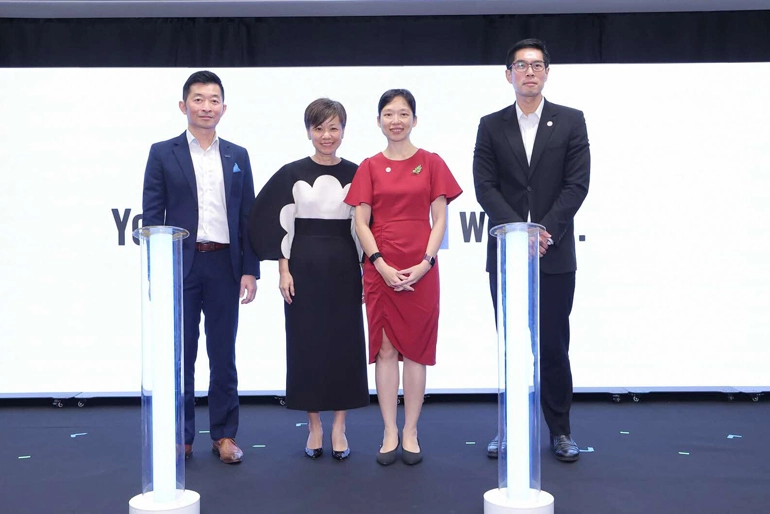
“For Singapore to capture opportunities in the bioeconomy, we need to move strong science closer to market. This joint lab is one way A*STAR and NUS are closing that gap, by working with industry to develop bio-based solutions that can be scaled into products, including for ingredients, chemicals and materials.”

Beh Kian Teik

Chief Executive Officer

A*STAR

Led by Professor Jay Keasling, a pioneer in synthetic biology, the joint lab will focus on three areas to accelerate industry translation:

  • Faster design: AI-guided enzyme and pathway engineering to shorten development timelines 
  • Scalable production: Industrially deployable microbial platforms to produce complex molecules at scale 
  • New molecules: Access to novel bio-based compounds for ingredients and functional applications

Strengthening Singapore’s Role in the Emerging Bioeconomy

The bioeconomy encompasses industries that use biological systems and biotechnology to produce chemicals, ingredients and materials. It is reshaping how goods are made at a fundamental level. The global market for bio-based chemicals alone is expected to exceed US$200 billion by 2030, while synthetic biology, a key enabling technology, is projected to grow to over US$60 billion in 20302,3.

This shift is evident in the food and nutrition space where bio-based ingredients are opening up vast new catalogues of sustainable sources. This transition allows industry players to strengthen their supply chains by diversifying the source of their ingredients and embracing the latest technologies. For example, in the production of ingredients such as omega-3 lipids, companies are reducing reliance on imported marine sources. Advances in synthetic biology, combined with artificial intelligence (AI) and large-scale data analysis, are accelerating the discovery and production of complex molecules that were previously difficult to make at commercial scale.

“As the chemicals sector adopts greener alternatives, industrial biotechnology offers companies a credible pathway to diversify raw material sources and develop novel, sustainable products. The A*STAR SIFBI-NUS Synthetic Biology Joint Lab will strengthen Singapore's capabilities in this emerging area, bringing together world-class R&D and industry translation to advance bioeconomy innovation from Singapore.”

Jermaine Loy

Managing Director

EDB

Building the Next Generation of Talent

Beyond research and industry engagement, the lab will serve as a training ground for Singapore's future scientists and engineers in areas such as synthetic biology, metabolic engineering, AI-guided biological design, and industrial biomanufacturing. Joint supervision arrangements, internships and fellowships are designed to develop researchers who can operate at the interface of academia and industry. Professionals with such skills are increasingly in demand as more companies build in-house biotechnology capabilities.

“NUS brings strengths in foundational science and interdisciplinary research. Especially relevant to this joint lab is our strong and established research track record and presence in the synthetic biology space, an example being NUS SynCTI. The joint lab gives our scientists a direct pathway to translate their work into practical outcomes, while equipping students and early-career researchers with valuable skills needed to operate across research and industry settings.”

Professor Aaron Thean

Deputy President (Academic Affairs) and Provost

NUS

Over time, the lab aims to catalyse technology licensing, start-up formation and new partnerships to build a pipeline of talent and ideas that will support the long-term growth of Singapore's bio-based innovation ecosystem.


1 NatureFinance and Getúlio Vargas Foundation. The Global Bioeconomy: Preliminary Stocktake of G20 Strategies and Practices: A Contribution to the Brazilian G20 Presidency’s Global Initiative on Bioeconomy. Prepared for the G20 Initiative on Bioeconomy (GIB), May 2024.

2 Green Chemicals Global Overview 2024–2030. Research and Markets, November 2024.

3 The Business Research Company. Synthetic Biology Market Report 2026. Published January 2026.

Contact Us Icon
Reach out to us for information on how we can facilitate your investment journey
Subscribe Icon
The latest business insights and news delivered to your inbox
Subscribe now