6
How the Johor–Singapore Special Economic Zone (JS-SEZ) helps companies strengthen supply chain resilience

How the Johor–Singapore Special Economic Zone (JS-SEZ) helps companies strengthen supply chain resilience

DHL, UPS, and Kuehne+Nagel’s twinned operations across their Singapore hubs and in the JS-SEZ has helped them optimise costs and capitalise on new opportunities

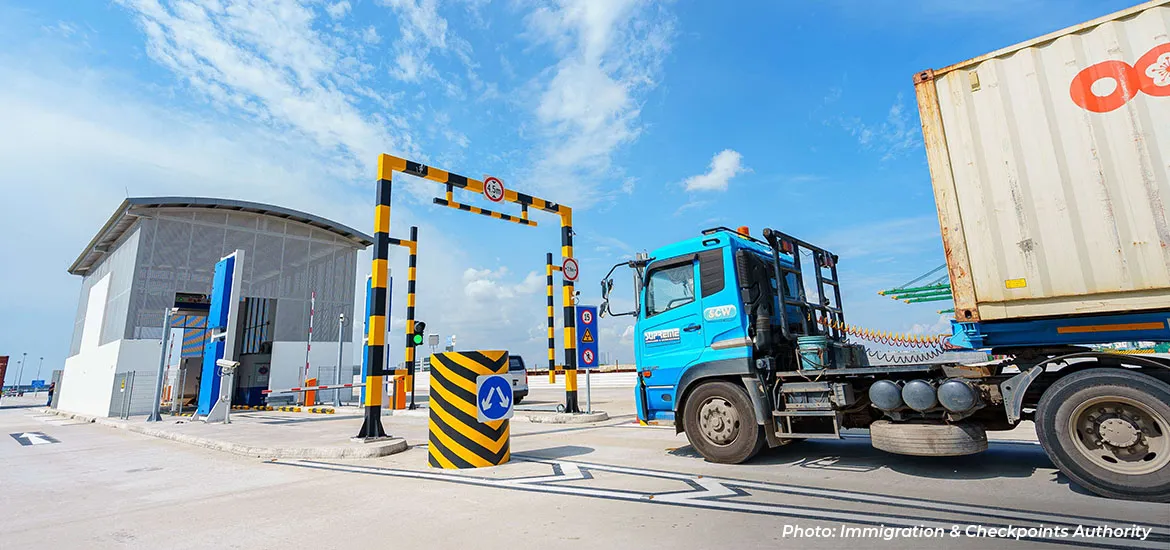
Container truck entering a checkpoint gate at a port or logistics facility under a clear blue sky.

In an increasingly uncertain global trade environment, businesses are under pressure to build resilient supply chains that can withstand disruption while remaining cost competitive. Singapore and Malaysia’s Johor-Singapore Special Economic Zone (JS-SEZ) is helping businesses draw on the complementary strengths of both markets. Companies can tap on Johor’s resource advantages such as land and labour, while remaining plugged into Singapore’s world-class logistics infrastructure, trusted business environment, and global connectivity.

For global logistics leaders DHL, UPS, and Kuehne+Nagel (KN), the JS-SEZ has spurred them to expand their footprint in the region and to manage some of the world’s most complex supply chains spanning healthcare, industrial, and e-commerce sectors.

Read on for their insights on how businesses looking for a stable base to drive their next phase of growth can benefit from the JS-SEZ.
 

1. Best of both worlds: cost efficiency meets global connectivity

Companies across manufacturing, logistics, and digital industries have long enjoyed the benefits of having “twinned” operations in Singapore and Johor. As Edwin Wong, CEO of DHL Supply Chain Southeast Asia explained, this model combines Singapore’s world-class connectivity and Johor’s cost-efficient ecosystem, which includes a competitive labour force, ample land for large-scale fulfilment and manufacturing operations, and lower utility and energy expenses.

Increasingly, the effectiveness of this model depends on how well companies can orchestrate and optimise their operations across both locations. Mr Wong said DHL’s Connected Control Tower (CCT) technology has helped businesses uncover gaps and inefficiencies in their inventory management through real-time tracking and predictive analysis. By leveraging analytics to support network redesign and inventory right-sizing, DHL reveals optimisation opportunities that companies may not have realised. This allows DHL to actively help customers unlock capacity and working capital.

Mr Wong said: “Ultimately, it’s about delivering a more efficient supply chain solution for our customers, by tapping into our analytics and utilising the benefits of proximity that the JS-SEZ offers. This provides greater visibility for our customers as we continue to build smarter, more sustainable supply chains across both borders.”

Other logistics players have observed similar benefits. KN noted that Johor is particularly attractive for sectors requiring substantial storage capacity, especially during seasonal peaks when warehousing demand can more than double.
 

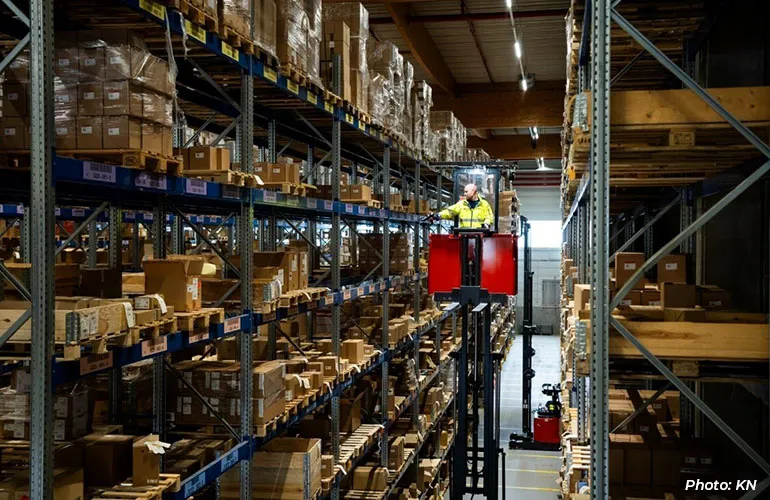
Worker operating a lift in a warehouse aisle with tall shelves stacked with boxes.

In KN’s fulfilment centre

“Companies [can] design hybrid models where time-critical and high-value cargo continues to move through Singapore while cost-sensitive and scalable activities are managed in Johor.”

Peer Rasmussen

Managing Director

KN Singapore and Malaysia


While some businesses may choose to relocate their large-scale fulfilment activities for slower moving goods to optimise costs, Singapore remains a critical node for companies’ regional distribution strategies. Mr Rasmussen explained that Singapore is the preferred hub for value-added services, high-value and time-critical cargo, and rapid market access. Singapore is a global gateway to Asia, with major cities in the region accessible within a seven-hour flight. In 2024, Singapore’s Changi Airport handled 67.7 million passengers and 366,000 aircraft movements. More than 7,200 flights depart each week – close to one every 80 seconds.

Furthermore, Mr Wong noted that Singapore’s extensive network of 29 free trade agreements (FTAs) helps businesses navigate today’s complex trade environment by providing more avenues to reach new trading partners. He said: “Given the current state of global trade, these FTAs enhance our customers’ trade opportunities offering them greater flexibility for both importing and exporting goods”.

Singapore’s strong connectivity networks are augmented by the growing number of free zones in the JS-SEZ. DHL highlights that businesses with Regional Distribution Centers (RDCs) and Global Distribution Centers (GDCs) in Johor can now move goods across the border into Singapore duty-free, eliminating the traditional cash-flow burden of upfront tax payments.

UPS recently enhanced its services in Johor with the opening of a new package centre in Senai and bonded warehouse at Senai Airport. The warehouse allows businesses to store inventory without immediate payment of duties and import taxes, providing the ability to respond quicker to customer orders and more flexibly manage regional stock levels while ensuring fast and cost-effective distribution to Singapore and beyond.
 

2. Streamlined cross-border trade and customs

Singapore and Malaysia are committed to making it easier and faster for businesses to move people and goods across borders. Several initiatives are already delivering benefits, such as passport-free QR clearance to enhance the flow of people and streamlined customs procedures to improve cargo flow. A single transshipment permit, for instance, has been launched by Singapore Customs for land intermodal transhipments, enabling goods arriving by truck from Malaysia to be efficiently transferred onto vessels or aircraft in Singapore for global export. This halves the number of permits needed from two to one, reducing processing time by 50% and saving the S$40 fee that previously had to be paid for each import and export permit application.

KN is seeing tangible benefits from these improvements across its operations in Singapore and Johor. In Singapore, KN operates six sites, including its Asia-Pacific headquarters and three fulfilment centres spanning over 75,000 sqm. In Johor, KN has two sites: an office in the city centre and a combined office-and-fulfilment centre at Tanjung Pelepas Port.

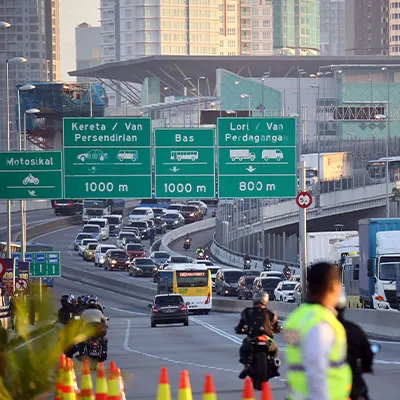
Mr Rasmussen, Managing Director, KN Singapore and Malaysia, said: “Our experience with customs clearance and permit processing has been encouraging. Procedures have become noticeably faster and more efficient. One of the most common misconceptions is that the border between Singapore and Malaysia is always congested, making efficient truck crossings difficult. In reality, with proper planning, cargo movements can be managed smoothly.”
 

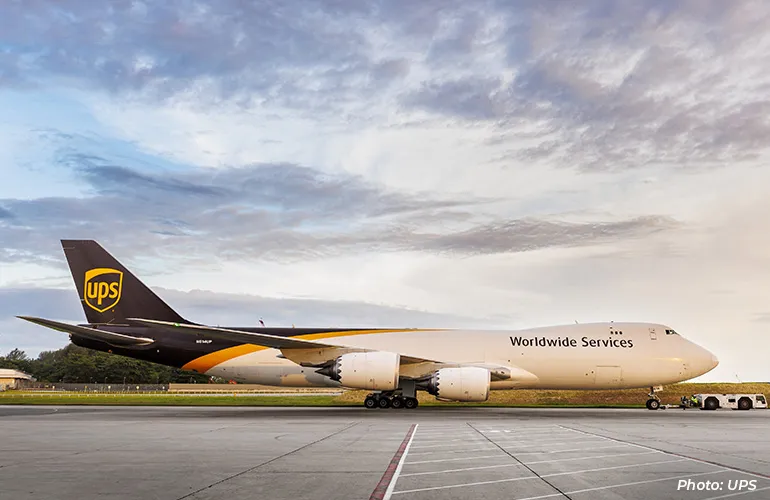
UPS cargo aircraft labeled “Worldwide Services” parked on an airport runway.

UPS’ cargo plane in Changi Airport

Ingrid Lorentz Sidiandinoto, Managing Director, UPS Singapore and Malaysia, said: “In anticipation of the JS-SEZ increasing trade and speeding up customs clearance, we’ve planned ahead for higher volumes. This includes looking at space, staffing, equipment, and delivery needs to support future demand from both sides of the border.”
 

“Now, imports and exports to and from Johor to countries across Asia Pacific can be delivered as soon as the next business day, while imports and exports from Europe and the US will arrive in as little as two business days.

Ingrid Lorentz Sidiandinoto

Managing Director

UPS Singapore and Malaysia


To support these cross-border flows, UPS also operates a regional hub at Changi Airport, which consolidates packages from across the region, including Johor. With 22 weekly flights into and out of Changi, all imports and exports from Johor are routed through Changi, enabling Johor-based customers to reach key markets in Asia, Europe, and the US more quickly and efficiently.
 

3. Logistics players are ramping up to serve growing demand

The JS-SEZ is attracting interest across a broad range of industries from industrial goods to consumer products and e-commerce all benefiting from the complementary strengths of Johor and Singapore, and the region’s investment opportunities.

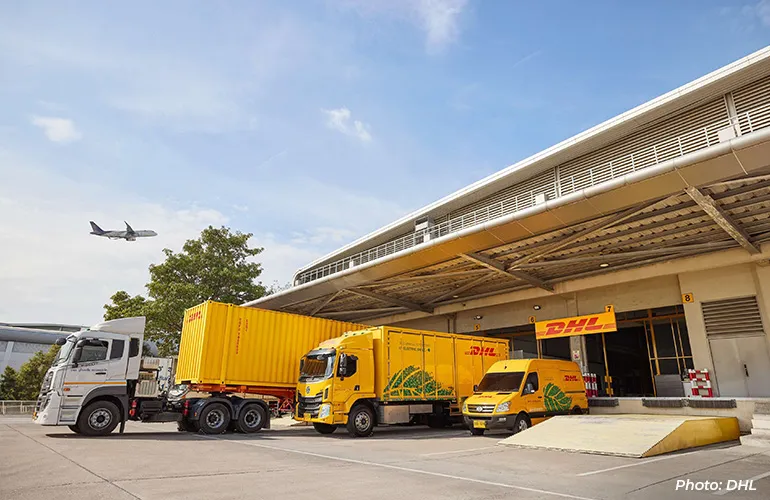
DHL delivery trucks and vans parked at a logistics facility loading bay, with an airplane flying overhead.

“Our growth in Singapore and across Southeast Asia isn’t happening by chance. The rise of the middle class across Southeast Asia is driving more consumer activity [alongside] infrastructure investments and regional efforts, including the ASEAN Economic Community, are making it easier for businesses to move goods, invest, and grow.”

Edwin Wong

CEO

DHL Supply Chain Southeast Asia


The healthcare sector, particularly pharmaceuticals and MedTech, is driving an even greater demand for specialised logistics solutions. Logistics players are responding by developing and scaling new logistics models for managing the regulatory, cold-chain and time-sensitive requirements of this highly regulated industry.

DHL has been investing ahead of this trend. The company recently invested €10 million (S$15 million) in a new Pharma Hub in Singapore, part of a larger €500 million (S$752 million) regional commitment to the life sciences and healthcare sectors. The 8,200 sqm, GDP-compliant facility features specialised cold-chain zones to support fast and reliable pharmaceutical distribution.

UPS recently doubled the size of its healthcare logistics footprint in Singapore with the opening of a new warehouse in Tuas, the company’s third healthcare-focused facility in the country. The site is equipped with advanced automation and cold chain technology to handle sensitive healthcare shipments.

KN operates a 50,000 sqm logistics hub near the healthcare cluster, with more than 40 per cent of its space configured for advanced cold storage, redressing, and postponement. This supports a robust cold chain distribution solution with temperature-controlled distribution of pharmaceutical and MedTech products across borders, including into Thailand.


The experiences of DHL, UPS, and KN spotlight a new operating model that allows businesses to design supply chains that are more resilient, responsive and scalable, as they seize growth opportunities in the region’s fast-growing markets.

With Singapore and Malaysia continuously working to improve regional integration and cross-border connectivity, the JS-SEZ can be an ideal gateway for  companies looking to scale their presence across Southeast Asia, which is projected to be the world’s fourth-largest economy by 2030.
 

Learn more about the JS-SEZ here and connect with EDB to explore how your business can benefit.

Related Content

Subscribe Icon
The latest business insights and news delivered to your inbox
Subscribe now