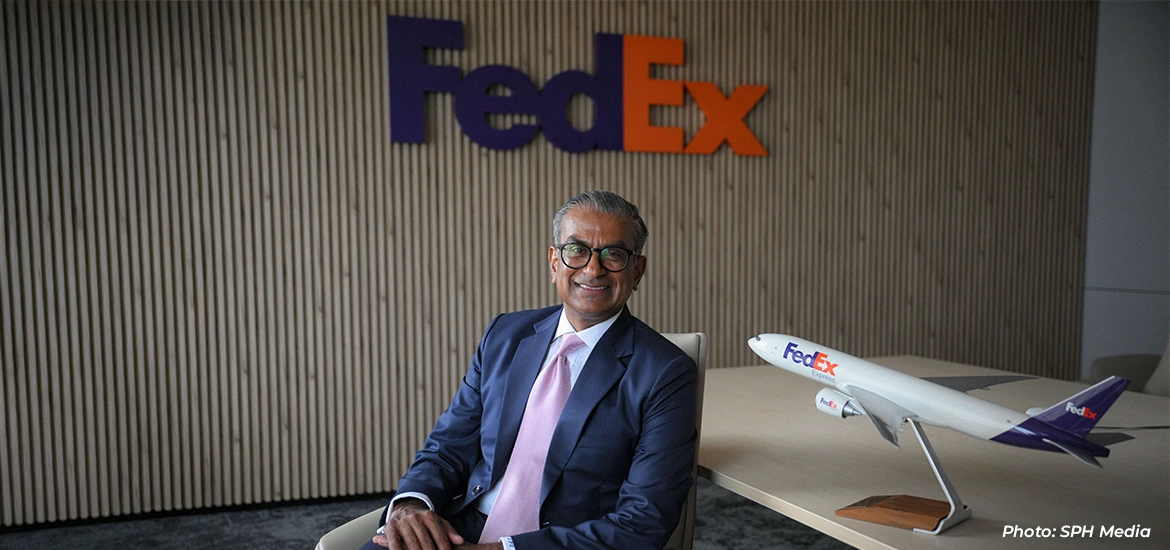
Getting packages delivered on time, without losing them, is no longer enough – it is just the bare minimum “table stakes” expected of any logistics industry player today, says FedEx’s Asia-Pacific president Salil Chari.
The bigger opportunity, he said, is making supply chains smarter and simpler with more advanced technology, and helping customers navigate the disruptions now facing supply chains.
Geopolitical uncertainties over the past year have raised the need for more adaptable and robust supply chains, says Chari, who assumed his role at the multinational delivery and supply chain services company’s Southeast Asia headquarters in Singapore in January.
This became a top priority when US President Donald Trump imposed tariffs on numerous countries in 2025 and suspended the de minimis rule, which had allowed shipments valued at US$800 (S$1,030) or less to enter the United States free of duties and taxes.
With every package now requiring clearance in the US, sending small parcels there has become much more expensive and unsustainable for many retailers, especially those in Asia, including China.
The ripple effects of this trade war have also spilt into Europe. In a bid to slow the rapid rise in imports from China, the European Union removed the €150 (S$220) de minimis duty exemption for imports from 1 July, and low-value shipments are now subject to a €3 customs duty per item category.
These sudden and disruptive changes sent companies around the world scrambling to adapt and find alternative shipping routes. They also reshaped trade flows and how the logistics sector operated.
Adapting to a new trade reality
Retailers, who previously shipped their products directly to consumers, had to pivot to a business model in which companies sell to consumers through other businesses, to avoid ballooning their shipping costs. This typically involved engaging an intermediary, such as FedEx, to clear goods at wholesale prices.
They also needed their logistics partners to help them navigate tariffs and ensure compliance.
FedEx’s chatbot helped customers calculate shipping costs and stay updated on customs requirements, Chari says.
As trade within Asia and to Europe accelerated, FedEx added more flights between the continents and expanded intra-Asia routes, including from its Guangzhou hub to Penang and Bangkok.
Singapore will continue to play a major role in FedEx’s operations as its regional hub in the South Pacific, with around 60 weekly flights to and out of the country.