IT WASN’T QUITE winter in London yet, but it felt like it on that November day in 2021. There was a break in the rain, but the air was chilly as patients climbed the 13 steps from the damp sidewalk into the warm glow of The Royal Marsden NHS Foundation Trust clinic reception room. It was a big day. The very first patient would receive the first clinical doses of HMBD-001, the first cancer treatment from Hummingbird Bioscience. Piers Ingram, the cofounder and CEO of the company, was nervous, but excited. This was the moment when HMBD-001 would be tested under real clinical constraints, and the Hummingbird Bioscience team would soon learn whether their work could stand up in the clinic.
Ingram and his team at Hummingbird Bioscience, a clinical-stage biotechnology company that raised more than $150 million for developing therapies for cancer and autoimmune diseases, had been working on the HMBD-001 drug for years, and researching, at the molecular level, how antibodies can selectively block disease-driving signals. More recently, the team is researching how antibody-drug conjugate (ADC) technologies can deliver drugs directly to diseased tissue while limiting exposure to healthy cells. From their headquarters in Singapore, they are focusing their efforts on cracking some of the hardest unsolved problems in medicine.
The approach was to tackle cancer with “an engineering mindset,” Ingram says, “to take a messy biological question, turn it into testable functional hypotheses, and then build molecules designed around those hypotheses rather than around convention.”
On that day in London, nearly 7,000 miles from where HMBD-001 was developed, the team’s core hypothesis was expanded to clinical testing as qualifying clinical trial patients diagnosed with multiple types of cancer received HMBD-001 by IV infusion, and the medicine reached the human bloodstream for the first time.
The trial focused on tumor types where HER3 signaling is implicated. HER3 is a membrane-bound protein that mediates cell-to-cell communication on growth and division. But when cancer is present, HER3 signaling can act as a pro-cancer driver, contributing to cell proliferation, tumor growth, and resistance to therapy.
The HER3 protein was discovered more than 30 years ago, but HER3 has been a challenging target, and translating HER3 biology into real clinical treatments that benefit patients has proven difficult. That’s because cancer is tricky, and “HER3 biology isn’t a single switch—tumors have multiple ways to activate and adapt,” Ingram says. So to develop a molecule that could block cancer growth by stopping HER3’s signals, the Singapore team asked a more specific question: “Can we engineer an antibody that more effectively suppresses HER3 function and signaling—not just bind the target?”
As those first drops of the infusion trickled down the IV line, HMBD-001 became the first clinical test of that hypothesis.
Inside the Lab
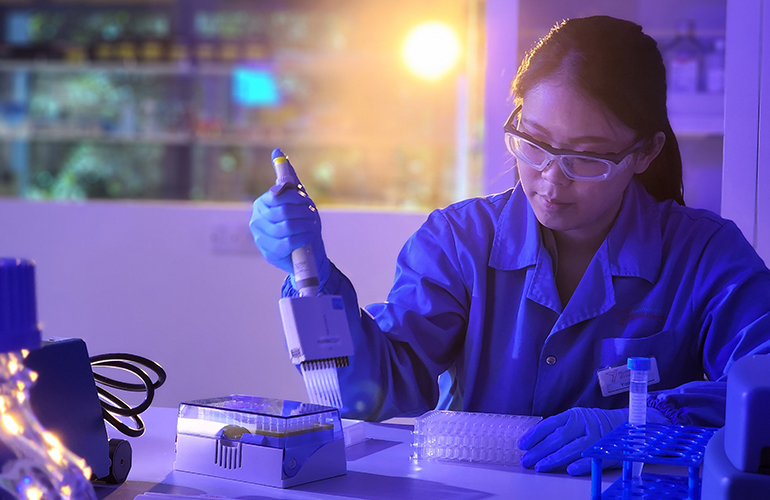
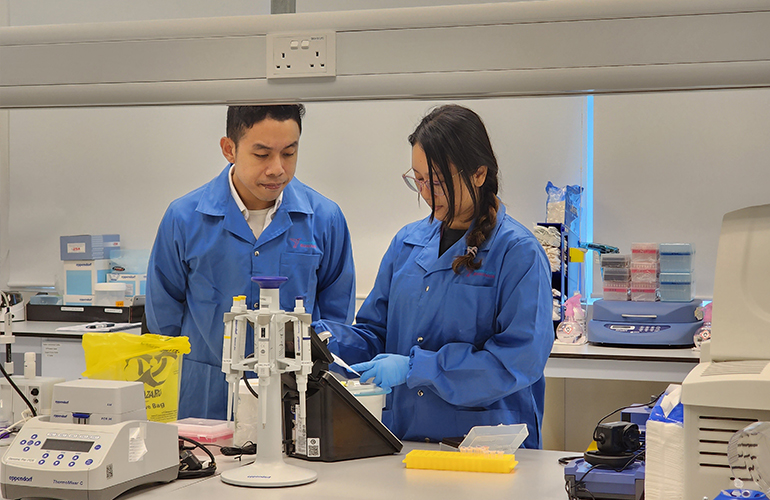
Under an umbrella of native rain trees in Singapore Science Park, the research team at Hummingbird Bioscience went to work. Computers hummed as graphs filled the screens. The team used proprietary, graph-based models to formalize different hypotheses and rank which experiments would be most decision-relevant. That workflow fed directly into programs that have progressed into clinical testing and into patients.
They were turning complex biology into testable, mechanistic questions and prioritizing those most likely to matter for potential treatments.
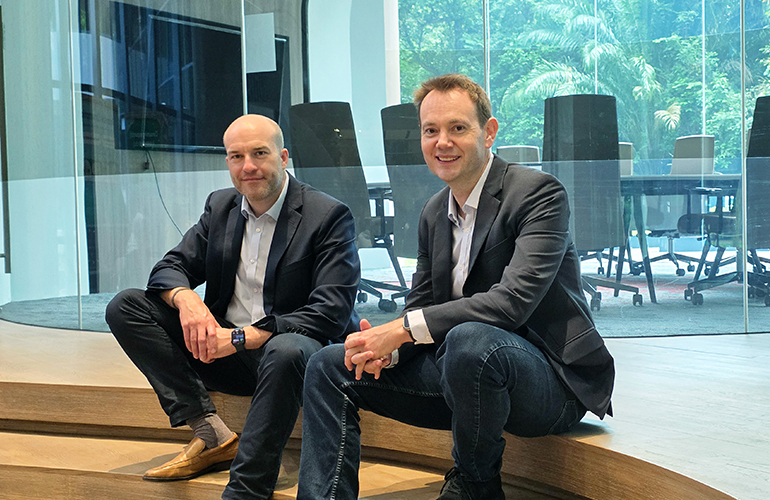
Precision was the key for Hummingbird Bioscience cofounders, Jerome Boyd-Kirkup and Piers Ingram. And Singapore is where they could create it.