Competing on value, not cost: Why Singapore appeals to German manufacturers

Competing on value, not cost: Why Singapore appeals to German manufacturers

They increasingly view Singapore not just as a sales outpost, but also as a base to serve the rest of Southeast Asia.


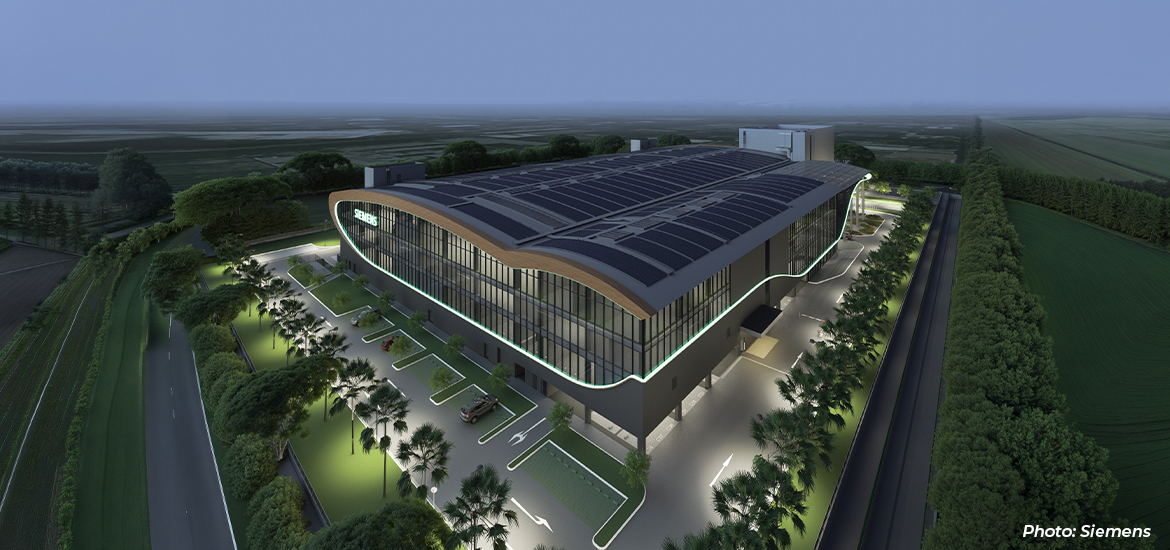
Architectural rendering of a modern Siemens industrial facility featuring rooftop solar panels, energy-efficient design elements, and landscaped surroundings, highlighting sustainable manufacturing and green infrastructure.

Siemens' planned 200-million-euro digital factory in Singapore will produce industrial automation products.

When Siemens announced plans in 2023 to build a 200-million-euro (S$299 million) digital factory in Singapore, the move prompted questions over why it would choose to manufacture in one of Asia’s more expensive business hubs.

But for the German engineering giant, the decision was not so much about labour costs. Rather, it valued the access to skilled talent, supply chain resilience, and Singapore’s role as a regional hub for advanced manufacturing and industrial innovation.

The move reflects a broader shift among some German industrial firms, which increasingly view Singapore not just as a sales outpost, but also as a base to serve the rest of Southeast Asia.

The Singaporean-German Chamber of Industry and Commerce (SGC) said Singapore’s appeal lies in its “highly developed industrial ecosystem”, strong connectivity, and skilled talent pool.
 

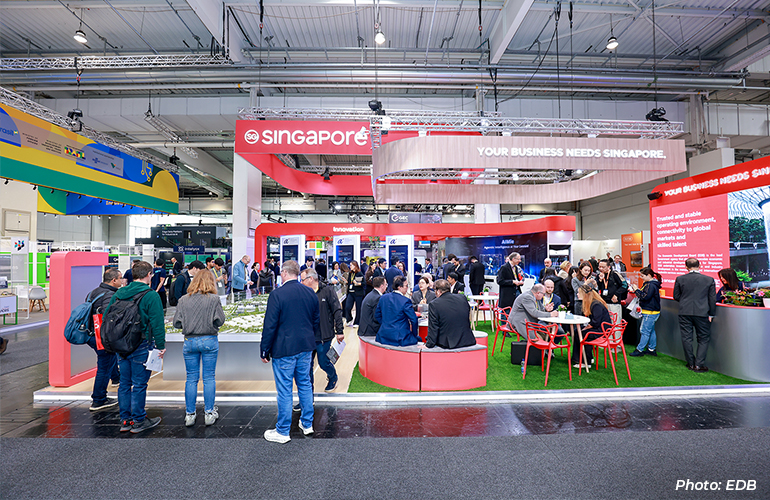
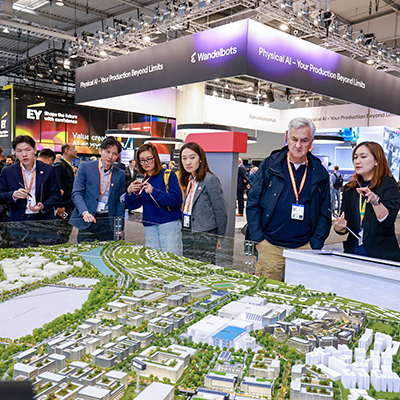
Visitors networking and exploring the Singapore pavilion at an international trade exhibition, featuring showcases on innovation, advanced manufacturing, AI, and business opportunities in Singapore.

Manufacturers are no longer focused solely on the cheapest or fastest way to produce goods, but on building operations that strengthen their long-term competitiveness.

Cindy Koh, executive vice-president of the Singapore Economic Development Board (EDB), said the country has been focused on helping companies become “best-in-class, sustainable, and resilient”, while strengthening its science, technology, engineering, and mathematics talent pipeline.


These factors, she said, were closely aligned with the priorities of leading manufacturers at the recent Hannover Messe trade fair in Germany.

“They told us that they are not looking for just the cheapest or fastest possible way to produce, but are set on building operations that can enhance their long-term competitiveness,” said Koh.
 

Region’s gateway

According to EDB, there are more than 2,300 German companies operating in Singapore today.

They range from multinational corporations such as Siemens to Mittelstand firms, or Germany’s predominantly family-owned small and medium-sized enterprises.

Kai Neuber, head of the SGC’s Centre of Competence for Trade Policy (Asia/ASEAN), said many German firms use Singapore as a “regional steering and coordination hub” for Southeast Asia.

Functions such as innovation, business development, and regional management are often anchored here even as some operations are distributed across the region, he added.

This gives companies access to a regional market of more than 680 million people with a combined gross domestic product exceeding US$3 trillion, according to EDB.
 

Competing on value, not cost

Singapore is also increasingly being used as a base for higher-value manufacturing and industrial innovation, as demonstrated by Siemens’ upcoming Tuas facility.

Slated to begin production in 2028, the plant will produce programmable logic controllers – one of Siemens’ flagship automation products – alongside related industrial computer panels. The factory will use digital twins and automated warehousing systems, and is expected to create around 400 jobs.
 

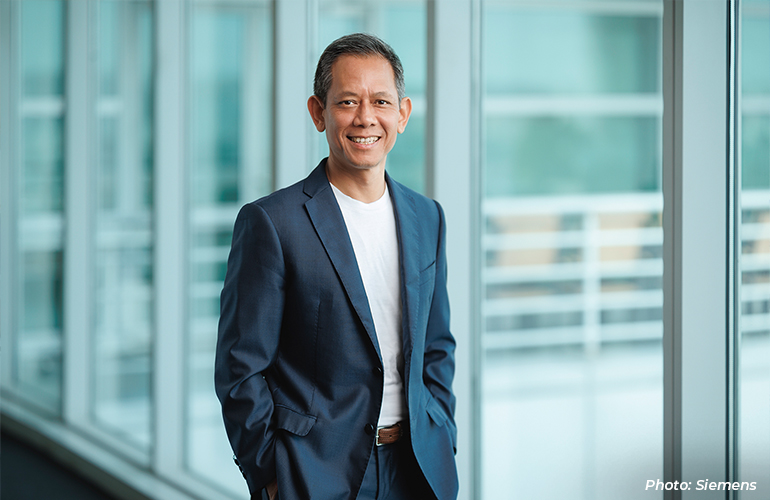
Professional portrait of a Siemens executive standing in a modern office environment, smiling confidently with floor-to-ceiling windows and a contemporary corporate workspace in the background.

Siemens’ ASEAN CEO Dr Pham Thai-Lai said Singapore’s skilled talent pool makes it a useful base for advanced manufacturing operations.

Siemens’ ASEAN CEO Dr Pham Thai-Lai said Singapore’s technology ecosystem, upskilling programmes, and skilled talent had made it a useful base for advanced manufacturing.

“It’s not the classical blue-collar workforce we will need,” he said, adding that the plant would instead rely on a smaller but more highly qualified talent pool.

German semiconductor manufacturer Infineon said it invested in Singapore as it offers strong intellectual property protection, geopolitical stability, and close public-sector partnerships – factors critical for advanced semiconductor manufacturing.

Budi Amron, senior vice-president and site head of Infineon Backend Singapore, said the company addressed Singapore’s higher land and labour costs by moving further up the value chain through automation, digitalisation, and productivity improvements.

Over the past decade, Infineon said its Singapore back-end operations had shifted from labour-intensive semiconductor testing to highly automated autonomous manufacturing, with parts of its final test operations running without lighting while being monitored remotely.

“Instead of just being a cost centre, manufacturing becomes a strategic asset that drives competitiveness, resilience, and innovation,” said Amron.


This focus on competing through productivity and engineering capabilities rather than low costs is also reflected among German industrial technology firms operating in Singapore, such as Beckhoff Automation.

Its regional managing director David Chia said Beckhoff’s premium positioning aligned naturally with Singapore manufacturers, many of which also compete on value rather than low costs.

“(Singapore manufacturers) look at us and say, ‘oh, German technology, you’re not cheap’, and I say, ‘yeah, neither are you’. So now we have a common start point,” said Chia.

He added that the question then became how Beckhoff and its Singapore partners could “win together”.

The answer, he said, lies in creating more value for end-users – from higher productivity and energy savings to lower lifetime costs – allowing offerings to compete on outcomes rather than price.
 

Collaboration beyond the factory floor

SGC’s Neuber noted that Singapore benefits from Germany’s strengths in advanced manufacturing, engineering, industrial technology, sustainability solutions, and scientific research.

“German firms often bring deep technical expertise, high-quality standards, and access to European industrial and research networks,” he said.

Electronics manufacturer SP Manufacturing, for instance, uses a hybrid model where teams in Singapore and Germany handle design support and prototyping, while production is shifted to lower-cost facilities in Southeast Asia.

Its global business development director Jackson Tan said this gave customers “the best of both worlds”.

Said Tan: “A customer can begin development in Germany for speed and precision, and then transition production to Malaysia or Indonesia for cost optimisation as volumes grow, all within the same company.”

He added that having a presence in Germany also gave the firm access to European industrial standards and local trust important in industries such as medical technology and automotive manufacturing.

Singapore industrial artificial intelligence company Innowave Tech said working with German manufacturers had also highlighted the similar challenges both countries faced from skilled labour shortages, ageing workforces, and competition from lower-cost manufacturing bases.

These pressures were driving manufacturers in both countries to place greater emphasis on productivity, automation, and process optimisation.
 

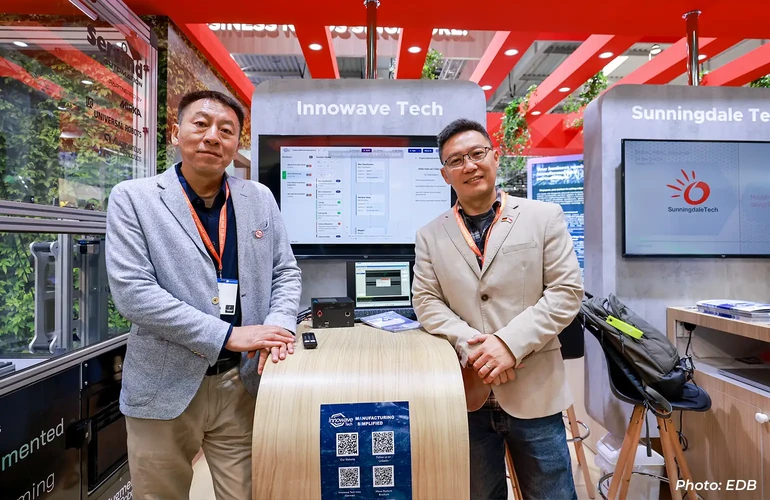
Two representatives from Innovave Tech posing at an exhibition booth, showcasing digital manufacturing and industrial technology solutions during a trade and innovation event.

Innowave Tech’s head of solutions Mike Feng (right) said Singapore’s firms can learn from Germany’s more systematic approach to industrial engineering and project planning. Also pictured is Innowave’s founder and CEO Xu Jingsong.

Innowave’s head of solutions Mike Feng said the company had also learnt from Germany’s more systematic approach to industrial engineering and project planning.

“The way the Germans approach projects is very systematic, and I think Singapore companies have a lot to learn from that,” said Feng. “They start from the outcome they want to achieve, then work backwards to formulate the process.”

Collaboration has also extended into research, engineering education, and workforce development.

Infineon’s Amron said Singapore serves as a regional R&D hub, with more than 600 employees in research and development roles.

He added that Infineon’s engineers lecture regularly at local universities such as the National University of Singapore and Singapore University of Technology and Design, in areas including power electronics, integrated circuit development, and AI.

The company has also partnered the Singapore Semiconductor Industry Association and EDB on an integrated circuit design summer camp aimed at exposing students to real-world semiconductor manufacturing.

German firms such as IFM and Beckhoff have also worked with local institutions and polytechnics on industrial automation training and workforce development initiatives.


IFM said it had previously worked with Singapore agencies and polytechnics to adapt elements of Germany’s apprenticeship model after struggling to find enough qualified engineers locally.

Students were sent to Germany for training before returning to Singapore to work in the industry.

“They returned after that to Singapore with the experience in Europe… and we add new people, new knowledge into Singapore,” said IFM’s chief human resource officer, Steffen Fischer.
 

Source: The Business Times © SPH Media Limited. Permission required for reproduction.

Related Content

Subscribe Icon
The latest business insights and news delivered to your inbox
Subscribe now