6
Microsoft ‘aggressively’ looking at Southeast Asian clean energy projects amid data centre boom

Microsoft ‘aggressively’ looking at Southeast Asian clean energy projects amid data centre boom

The tech giant will also ‘take a very close look’ at Singapore’s latest call to build new data centres.

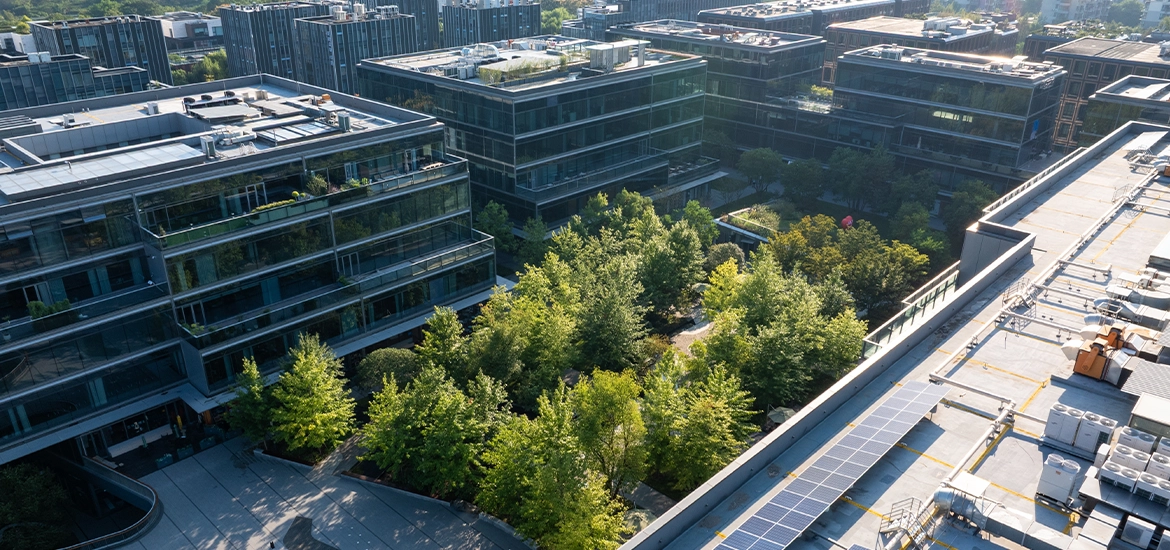
Aerial view of a modern office campus with green courtyards and rooftop solar panels.

Microsoft is looking into cross-border clean energy projects in Southeast Asia to fuel its data centre growth in the region sustainably, said the company’s vice-president of energy Bobby Hollis.

“We’re looking at all of (the projects) as aggressively as we can,” said Hollis, when asked if the company plans to offtake power from any of the region’s cross-border energy projects, including those importing clean power into Singapore.

These projects are part of the ASEAN Power Grid (APG) – the bloc’s effort to link up its 10 members’ power systems by 2045.

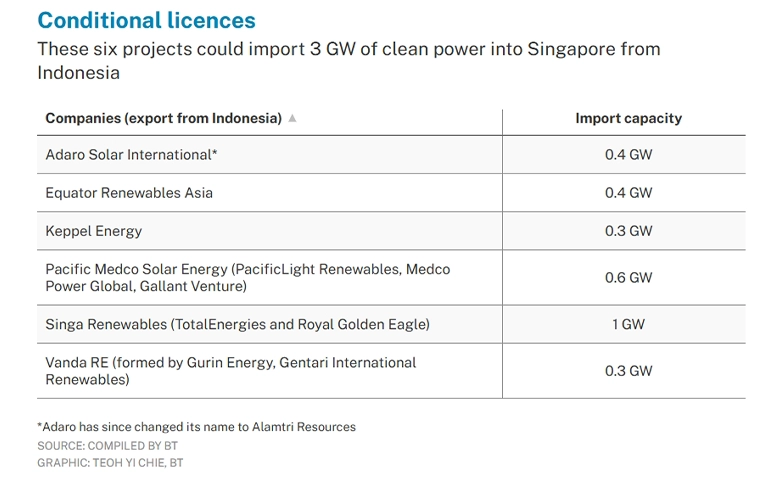
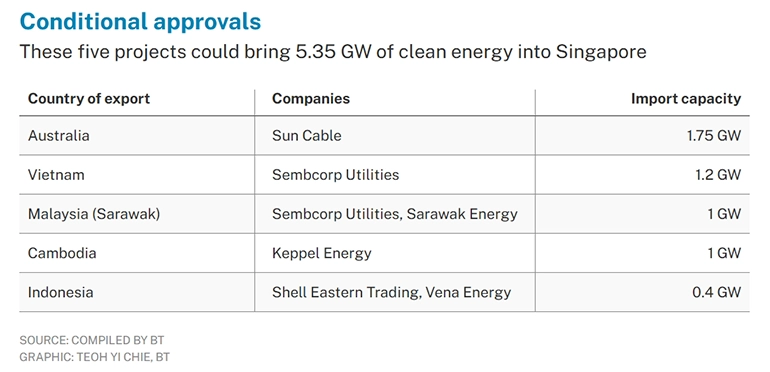
Singapore itself has thus far awarded 11 conditional licenses and approvals for energy import projects, which could potentially bring in as much as 8.35 gigawatts of clean energy into the Republic.
 

Conditional licences
Conditional approvals

We’re also trying to work with the different parties – whether it’s the utilities or the governments – to make sure that the (projects’) mechanism is viable and durable,” Hollis added, noting that many of these projects are still at the pilot stage.

“How do we get to a place where the pilot becomes truly commercialisable… for companies like ours and many others to actually say: “This is how we can source renewable energy”? We’re very much interested in looking into all of those.”

Microsoft channels its purchased clean power to the grid, and not to the sites of specific data centres. This is in line with the company’s aim to match 100 per cent of its energy consumption with new renewable energy resources by the end of 2025.

Microsoft thus far has power purchase agreements (PPAs) for more than 34 gigawatts of renewable energy, across 24 countries.

Globally, it is involved in over 135 renewables projects.

Notably, Microsoft is now also turning to nuclear power for data centres. In September, it inked a 20-year PPA to restart a nuclear power reactor at the Three Mile Island facility in Pennsylvania.

While Three Mile Island is infamous for a nuclear disaster in 1979, the unit that is being restarted was not involved in the incident and ran safely up till 2019, when the plant was shuttered for financial reasons.

Asked if nuclear energy could fuel data centres in Southeast Asia, Hollis noted that the topic is politically sensitive and safety is key. He cited newer technologies, such as small modular reactors, being able to incorporate safety features.


“We definitely would love to see nuclear power become part of all the conversations globally where it makes sense,” he said.

Growth opportunities

With the boom in AI demand, Southeast Asia has emerged as a key growth market for Microsoft’s data centres. The company declined to share how many data centres it has in each market, but cited Singapore, Kuala Lumpur, Johor Bahru, and Jakarta as key hubs.

Earlier this month, Singapore put out a call for applications to build new data centres, with at least another 200 megawatts (MW) in capacity available. This follows its plans to build a data centre park of up to 700 MW on Jurong Island.

The Republic has been selective in allocating fresh capacity since a three-year moratorium on new data centres that was lifted in 2022.

Asked if Microsoft plans to participate in the call for applications, Hollis said that the company will “take a very close look at it”.

“We’re always looking at the opportunities to grow in Singapore in whatever ways make sense, but then we also want to make sure that we can do it in alignment with our sustainability goals,” he said.

Last year, Microsoft inked an agreement with solar developer EDP Renewables to purchase 100 per cent of the power exported to the grid from the SolarNova 8 project.

“Singapore is absolutely leading, from the standpoint of an urbanised country being able to take as much advantage of the resources that they can,” said Hollis.


He also sees plenty of renewable energy potential in the rest of the region. For instance, Indonesia “has been a longtime geothermal – pun intended – hotspot for the entire globe,” he quipped.

Johor Bahru is also a “huge growth engine” and a location where Microsoft “will be growing very significantly” – not just in terms of data centre capacity, but also in developing educational and skills programmes for local communities.

India is another promising market, as grid reliability improves and clean power opportunities increase, “because the government and the utilities there have really leaned into that sector”, said Hollis.

From next year, Microsoft plans to focus more on having conversations with energy developers in each market and learning more about their portfolios so that it can better match energy consumption with clean power.

“A bit of the trickiness is making sure that if our data centre is showing up in a particular year, we need the renewable energy to show up in that same year as well,” Hollis noted.

Such matching is vital to ensure that “additionality” is in place, meaning that Microsoft is adding clean power to the grid while it is adding load.

Hollis also echoed industry calls for more universal standards in how data centres report their use of clean power. This is so that “anybody that’s looking at the record-keeping can know that it took place exactly the way we said”, said Hollis.

On the cost front, Hollis is optimistic about the economics of clean power improving.

“I was talking, 15 years ago, about 300-dollar megawatt-hour pricing for photovoltaic (PV) solar – and now there’s PV solar happening at 25 dollars in parts of the world,” he said.

“So you do see that commercialising scale, looking at new technologies. Who knows what the next one is?”
 

Source: The Business Times © SPH Media Limited. Permission required for reproduction.

Related Content

Subscribe Icon
The latest business insights and news delivered to your inbox
Subscribe now