6
You can’t visit Jurong Island, but these 4 Singaporeans can tell you what happens there

You can’t visit Jurong Island, but these 4 Singaporeans can tell you what happens there

While these Singaporeans come from different occupations, they share one thing in common: they took a chance on a sector they did not originally set out to join.

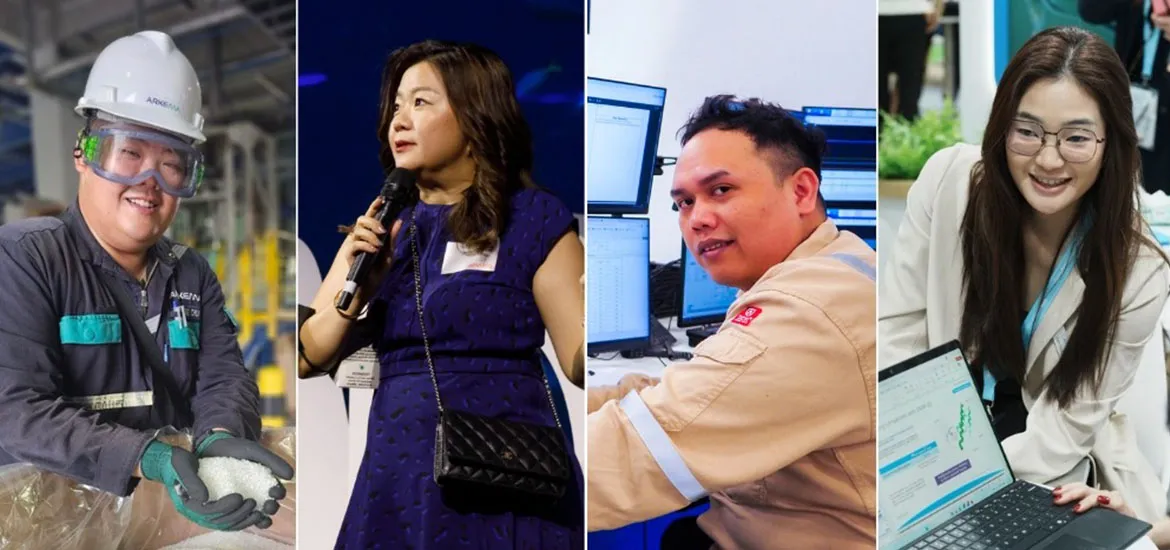
Four-person collage showing a factory worker in safety gear, a woman speaking on stage, a technician at computer monitors, and a professional presenting information on a laptop.

If you did a search on Jurong Island, one of the most common questions you’ll find is, “Can anyone enter Jurong Island?”

The short answer is “no” because Jurong Island isn’t open to the public.

But behind the security checks, you’ll find average people, like you and I, who are living not-so-average lives, driving Singapore’s energy and chemical sector, which accounts for about 3 per cent of the country’s gross domestic product (GDP).

While other crucial energy and chemicals activities continue to take place on our mainland, today, Jurong Island serves as the cornerstone of the industry, while also evolving into a testbed for innovation, new energies and low-carbon technologies.

Here are four Singaporeans and their journeys on one of Singapore’s most secretive important industrial sites.


Proof that your first job doesn’t define your ceiling

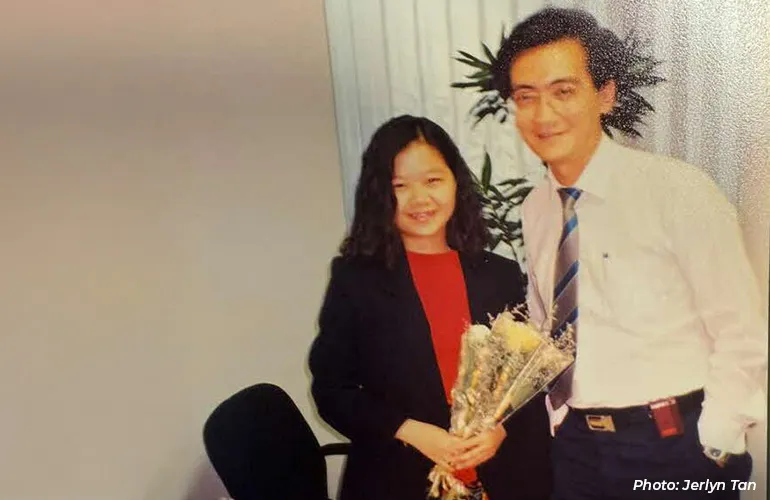
In 1993, 20-year-old Jerlyn Tan was on the lookout for a full-time job so her mum wouldn’t worry.

She spotted a phone number on a job advertisement, made a call, and found herself hired as a receptionist at an MNC, which would later become Advario, a European liquid storage logistics firm.

Two people posing indoors, with the woman holding a bouquet of flowers while standing beside a man in a shirt and tie.

Before Jerlyn realised, she had been with the company for 32 years, moving from undertaking administrative roles to global leadership programmes, sustainability training, and now a Vice-President position leading people, IT, comms, legal, and more.

Though her work with Advario doesn’t require her to be at the storage terminals on Jurong Island daily, where the company’s facilities are located, her career is a testament to the opportunities available for people who are willing to give anything a shot amid uncertainties.


Working in a world-class plant at Jurong Island

Did you know that the world’s largest synthetic rubber latex plant is located in Singapore?

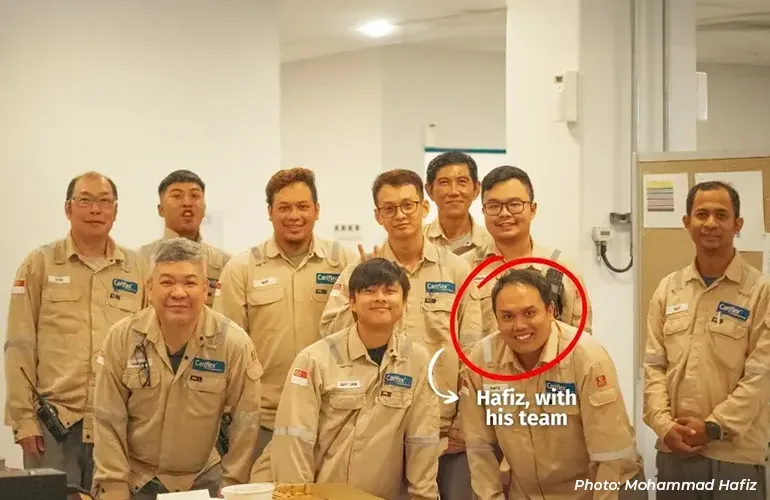
For Mohammad Hafiz, this isn’t just a fun fact but a project that he helped build from scratch as part of the pioneer senior technician team at Cariflex.

In case you’re wondering, Cariflex is a major producer of synthetic rubber latex that is commonly used in surgical gloves and condoms.

Through his work, Hafiz collaborated with teams from Brazil, Korea, and Europe.

He even flew to Brazil for a month to understand how plants run in a different environment and economy.


Group of workers in beige uniforms posing indoors, with one team member highlighted by a red circle and caption indicating him with his team.

After all that overseas exposure, Hafiz still takes pride in working at Cariflex right here in Singapore, at Jurong Island.

“It’s the heart of Singapore’s chemical and petrochemical industry. Being here means operating at world-class standards,” says Hafiz.


From EV batteries to skincare, an unexpected glow-up

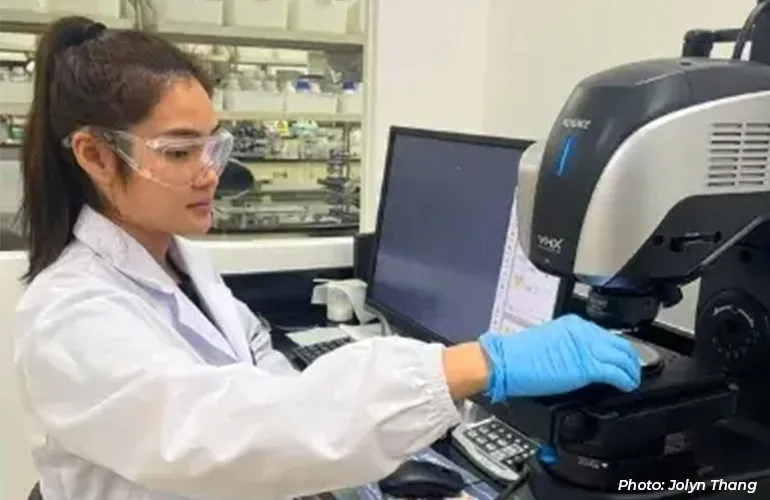
Though Jolyn Thang graduated with a pharmaceutical engineering degree, her first job was in an entirely different specialisation.

She had landed a role at Lubrizol, a company focusing on specialty chemicals, working on materials for lithium-ion batteries, thanks to the EDB-supported Industrial Postgraduate Programme.

Five years later, Jolyn pivoted to beauty science within the company, and began developing skincare ingredients, including a patented peptide that helps our skin look five years younger in just five days.

Scientist wearing safety goggles and gloves operating laboratory equipment beside a computer in a lab setting.

The pivot was possible because of Jolyn’s transferrable skillsets, especially from her engineering degree and experience in specialty chemicals.


How a trainee with 0 experience worked his way to France

When Ng Chun Siong graduated in the middle of the pandemic, job hunting was demoralising. Something that many may be able to relate to right now.

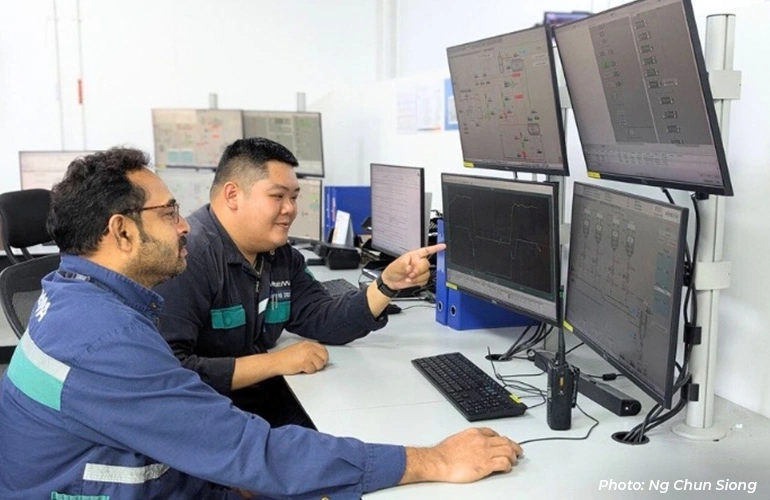
Things started looking up after he came across the SGUnited Traineeship, which offered him a shot at joining Arkema’s new bio-based materials plant as a trainee process engineer.

As a fresh grad with no hands-on industry experience, Chun Siong studied technical documents, wrote operating guides from scratch and even learned from overseas teams.

Two technicians reviewing data on multiple computer monitors at a workstation.


Commissioning a new production line and being sent to France for overseas training were simply two out of the many moments that marked his career journey at Arkema and how the company saw potential in him.

Most of us would likely not get to see what happens on Jurong Island, much less inside world-class labs around the world.

But the stories of Jerlyn, Hafiz, Jolyn, and Chun Siong show that Singapore’s energy and chemicals sector may have more to offer than what meets the eye.

In the last three decades, the sector has attracted more than S$50 billion in investments. It contributes roughly a quarter of Singapore’s total manufacturing output and employs 27,000 people.

The sector is still growing, with companies investing in specialty chemicals and sustainable materials manufacturing, and R&D in Singapore.

Whether you’re a fresh graduate, mid-career switcher, or simply someone inspired to be a part of the industry’s future, you can find out more here.

Source: Original article by Mothership


Related Content

Subscribe Icon
The latest business insights and news delivered to your inbox
Subscribe now